
This article has been updated December 26, 2024
The scope of branding design and identity creation is enormous.
Branding is often reduced to visuals, but the reality is much bigger than that. Your logo, website, messaging, and marketing materials all shape how people experience your business, but none of those pieces should exist in a vacuum. Strong branding starts with clarity around who you are, who you serve, and how you want to be perceived.
That is where brand positioning comes in. It helps define the space your business wants to occupy in the minds of its audience, while the branding process turns that strategy into something tangible. The visuals matter, but they work best when they are backed by a clear direction.
It is easy to get overwhelmed by all the moving parts surrounding branding, not to mention all the design lingo that tends to come with it. So before getting into the creative process, it helps to simplify the core ideas and look at how branding, brand identity, and brand positioning actually work together.

Brand
This is the public’s overall perception of your company.

Branding
These are the actions taken to build your brand towards a certain image.

Brand Identity
Includes the tangible expressions of your brand (logo, typography, colors).
Brand Positioning to Brand Identity
Video: A Quick Message on Branding Essentials
Why Brand Positioning Comes Before Design
Before a logo gets sketched or a color palette gets chosen, there needs to be clarity around what the brand stands for and how it should be understood. That is the role of brand positioning. It helps define the value your business brings to the table, the audience it is trying to reach, and the impression it wants to leave.
In simple terms, brand positioning is about identifying what makes your company distinct and making sure that difference comes through clearly. It influences your messaging, your tone, your visuals, and the expectations people attach to your business. Without that foundation, branding can still look polished, but it may not say anything meaningful.
A strong brand position usually takes shape around a few essentials:
- who your audience is
- what problems you solve
- what makes your approach different
- what tone or personality fits the business
- what kind of perception you want to create over time
- what differentiates you from your peers
While brand identity and messaging are important, they are not the ultimate measure of success on their own. If your promises do not match what you actually deliver, the disconnect can damage trust. At best, people ignore the mismatch. At worst, it hurts your reputation. Simply put, your brand has to walk the walk.
Once those ideas are clear, the creative work becomes much more focused. A strong logo is not just a standalone graphic. It is part of a larger identity system shaped by research, exploration, refinement, and consistency.
Consider this: According to a U.S. Bank study, 78% of small businesses fail because they lack a well-developed business and marketing plan—of which branding is a core pillar.

Turning Strategy Into Design
Some people are surprised to hear how long it can take to create a strong logo. That is usually because the final mark looks simple and contained. In reality, getting there takes time and a lot of iteration. A logo is not just a standalone graphic. It is part of a larger identity system shaped by strategy, research, design thinking, and refinement.
Whether we are creating something from the ground up or reworking an existing identity, the process tends to follow the same core steps. There are no shortcuts to creating a decisive mark with real staying power. Designers may get compared to visual magicians from time to time, but in practice, good results do not come from magic. They come from a process.
That process usually includes:
- Information Gathering
- Design Research
- Sketching and Idea Generation
- Concept Development
- Reflection and Review
- Finalization and Approval
- Branding Guidelines and Moving Forward
When these steps are handled with care, the final identity is not just attractive. It becomes more accurate, more useful, and more durable over time.
Information Gathering
Any good creative agency knows this is one of the most important and potentially time-consuming stages of the branding process. Designers are stepping into your world, and naturally, they will not know your company the way you do. That is why the first step is learning your business inside and out so the work can reflect it accurately.
The goal is to understand your company as closely as possible from the inside: how it operates, what it values, who it serves, and how it wants to be seen. Is the brand serious, playful, refined, bold, or somewhere in between? These answers start shaping the design direction early.
To get there, we have clients fill out a questionnaire known as a branding design brief. A design brief is essentially a document that helps uncover the bigger picture behind the brand. It often explores questions like:
- Who are your competitors?
- Who is your target market?
- What problems do you solve for your customers?
- What makes your business different from the competition?
- How do you want people to describe your brand after interacting with it?
- What do you want your brand to be in the future?
Filling out detailed questions may not be the most exciting part of the process, but it is absolutely pivotal. It helps the branding agency get familiar with your business and gives the work something real to build from.
This stage is where brand positioning starts becoming actionable. It helps diagnose the right creative direction and gives the agency team a clearer sense of what tone, style, and strategy should guide the project moving forward.
Sketching and Idea Generation
This is where pencil meets paper, literally, and curiosity starts doing the heavy lifting. Based on what we have learned from the design brief and our research, we begin sketching every potential idea and direction we can think of.
At this stage, nothing is too small or too rough to explore. Some ideas go nowhere, while others open up unexpected possibilities. The goal is to cast a wide net and see which directions begin to reflect the brand most effectively. There is also a strong intuitive element to this part of the process. Brand designers are highly visual, and often visceral, so instinct plays an important role alongside strategy and research.
We cover our bases and push different possibilities as far as they need to go before narrowing things down. Eventually, the strongest ideas rise to the top, and those become the concepts worth developing further.

Concept Development
This is where the process starts to tighten up. The strongest ideas move from paper into the digital realm, where they can be refined into polished vector designs. At this point, the work becomes more precise, more intentional, and more adaptable across real-world applications.
A strong concept needs to work at different sizes, across different formats, and in different color treatments. It should feel distinct without becoming overcomplicated.
This stage also involves selecting typefaces, color palettes, and other supporting visual elements. These decisions are not made in isolation. Each one should support the client’s personality, audience expectations, and long-term brand goals.
In other words, this is where strategy starts to look like something.

You can view the case study here.
Reflection and Review
After the strongest concepts have been developed, it is time for a bit of reflection and review. This is an easy step to overlook, but it is crucial to creating the best version possible.
Stepping back allows the work to settle. Coming back with fresh eyes makes it easier to review the design more objectively and catch things that might have been missed during the more active stages of development. The art director or logo designer might have had an aha moment in the shower.
This stage is not just about polishing the work. It is also about checking whether the design still feels true to the original strategy. Does it reflect the business accurately? Does it support the intended positioning? Does it feel like something the brand can grow into and stand behind with confidence?
Once that alignment is there, the work is ready to move toward finalization.
Finalization and Approval
Once a direction feels right, the final stage is about tightening everything up and making the last necessary adjustments. This is where the details get ironed out, the system becomes more complete, and the work is prepared for approval and use in the real world.
When the final direction is approved, that is worth celebrating. But it is also the point where the brand begins its next phase: consistent application.
Visual Elements of Brand
The visual elements of a brand are what people interact with most directly, but they are only effective when they work together as a system. A logo may be the most recognizable element, but color, typography, imagery, and supporting graphic styles all influence how a brand feels.
These choices do more than make a brand look polished. They help communicate personality, reinforce positioning, and create consistency across every platform where the brand appears. When the visual elements are aligned, the brand becomes easier to recognize and easier to trust.
These elements often include:
- Logo: the symbol or mark most closely associated with the brand
- Color Palette: a set of colors that helps define mood, tone, and recognition
- Typography: the typefaces that shape how the brand communicates visually
- Imagery: photography, illustration, or graphic treatments that support the message
- Patterns and Textures: supporting visual elements that add depth and character
When all of these pieces work together, they help create a brand identity that feels cohesive rather than pieced together.

Branding Guidelines and Moving Forward
Once the logo and broader identity are complete, the work does not stop there. That is where branding guidelines come in.
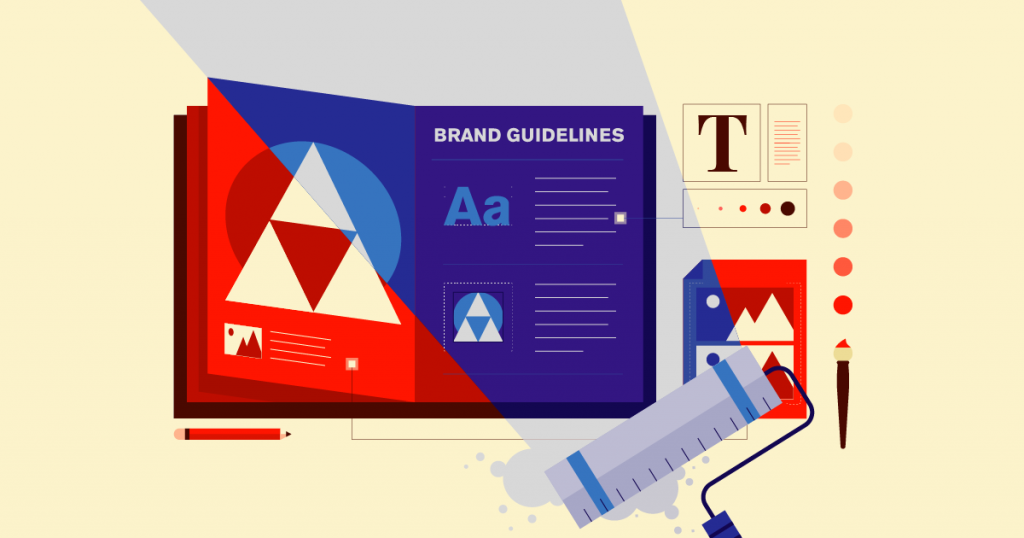
Branding guidelines are the documents that define how the brand should be used moving forward. They typically outline logo usage, colors, typefaces, spacing, and other visual rules that keep the identity consistent across campaigns, platforms, and future creative work.
This document matters because consistency matters. If another creative team needs to work with your brand later on, solid guidelines make that transition smoother. They provide a rulebook that helps everyone understand how to stay aligned with the visual system already in place.
They also protect the brand internally. We have seen plenty of situations where someone goes rogue, fancies themselves a designer, and starts improvising without respecting the system—that’s why you need to put guardrails in place. Inconsistency can cause brand confusion quickly.
Good branding guidelines save time, reduce guesswork, and make it easier for future content to stay in line with the identity you invested in building.
Measuring Success and Continuous Improvement
A strong brand identity should do more than look good on its own. It should help people understand who you are, what makes you different, and what they can A strong brand identity should do more than look polished. It should create a consistent impression, shape perception in the right way, and become more recognizable over time. Success is not just about whether the work looks good in isolation. It is about how people respond to it, how clearly it communicates, and how consistently it is carried across every touchpoint.
Some helpful questions to ask include
- How are people reacting to the brand?
- Is the brand being perceived the way it was intended?
- Are internal departments staying consistent with the identity system?
- Are people recognizing the brand more easily over time?
- Is the messaging still aligned with the experience the business actually delivers?
Branding is not a one-time event. As businesses grow, audiences shift, and markets evolve, it is important to revisit the brand from time to time and make sure it still reflects the company accurately.
Continuous improvement does not mean constant reinvention. It means protecting the integrity of the brand while making thoughtful adjustments when they are actually needed.
Are You Considering a Rebrand?
Rebranding is not a decision to take lightly. It goes far beyond changing a name or refreshing a logo. In many cases, it reflects a deeper shift in the business itself.
Maybe the company has grown. Maybe the audience has changed. Maybe the offerings have expanded, or the original branding no longer reflects the quality of the experience being delivered. When that happens, rebranding can be a smart move, but only when it is approached strategically.
A successful rebrand should clarify your positioning, strengthen recognition, and better align your identity with where the business is now, not just where it started. With thoughtful planning and execution, rebranding can breathe new life into a business and strengthen customer connections.
If you are heading in that direction, it is also worth thinking about how to rebrand without upsetting your audience.
Final Thoughts by Mighty Fine Co.
Branding works best when it is built from the inside out. The visuals may be what people notice first, but the strength behind them comes from clarity, positioning, and consistency. A logo on its own cannot carry a brand. It needs the support of strategy, thoughtful execution, and a system that can grow with the business over time.
That is why the process matters. When brand positioning is clear from the start, the creative work becomes more focused, more meaningful, and more durable. Instead of chasing trends or making decisions in a vacuum, you end up with an identity that reflects who you are and gives people something memorable to connect with.
At Mighty Fine Co., we believe good branding should look sharp, feel intentional, and hold up in the real world. That means combining strategy with creative thinking to build identities that are not only visually strong, but rooted in something real. If you are building a brand from the ground up or rethinking one that no longer fits, the goal is the same: create something that feels true, works hard, and lasts.
FAQ
What is the difference between branding and brand positioning?
Branding is the overall process of shaping how people experience and perceive your business through visuals, messaging, and consistency. Brand positioning is the strategic foundation behind that process. It defines who you are for, what makes you different, and how you want to be understood in the market.
Why does brand positioning come before design?
Brand positioning comes first because design needs direction. Before choosing a logo, colors, or typography, there should be clarity around your audience, your message, and the impression you want to leave. Without that foundation, a brand can look polished but still feel generic or unclear.
Is a logo the same thing as a brand identity?
No. A logo is one part of a brand identity, but it is not the whole thing. Brand identity also includes typography, color palette, imagery, graphic elements, and the overall visual system that supports how the brand is recognized.
Why does the branding process take so long?
Strong branding takes time because it involves more than making something look good. It requires information gathering, research, creative exploration, refinement, and consistency planning. The goal is to build something that reflects the business accurately and can hold up over time.
What is a branding design brief?
A branding design brief is a questionnaire or planning document that helps uncover the bigger picture behind a business. It usually covers things like audience, competitors, goals, personality, values, and future direction so the creative work has a clear strategic foundation.
What should a branding design brief include?
A branding design brief should help clarify the essentials of the business. This often includes your target audience, competitors, brand personality, goals, positioning, services, and the way you want people to perceive your company over time.
Why are branding guidelines important?
Branding guidelines help keep your identity consistent across departments, campaigns, and future creative work. They outline how to use your logo, colors, typography, imagery, and other visual elements so the brand stays recognizable and aligned over time.
How do you know if a brand identity is working?
A brand identity is working when people are recognizing it more easily, responding to it in the intended way, and experiencing consistency across different touchpoints. It should support clarity, trust, and recognition rather than confusion.
When should a company consider a rebrand?
A company should consider a rebrand when its current identity no longer reflects the business accurately. That can happen when the audience changes, the company grows, the offerings expand, or the original branding no longer matches the quality or direction of the business.
Does rebranding mean changing everything?
Not always. Sometimes a rebrand is a full overhaul, but other times it is more of a strategic refinement. The right approach depends on what has changed in the business and whether the current brand still supports the way the company needs to be perceived.