
Ad Agency Services & Roles
If you've ever wondered what an advertising agency really is—beyond "people who make ads"—you're not alone. The term gets tossed around like it's obvious, but agencies come in different shapes, sizes, and specialties. Some are conscientious partners who become an extension of your brand. Others churn out generic work that could belong to anyone.
Beneath the surface, the best ad agencies are strategic partners shaping how ambitious brands show up, stand out, and scale.
A good advertising agency is a strategic creative partner that helps you attract the right people, earn attention, and turn that attention into action. They do this with clear messaging, strong design, and campaigns built to perform—not just to look pretty on a mood board.
A high-performing agency is more than a vendor or a "creative shop." It's a business growth partner equipped to sharpen your message, streamline your visual identity, and turn hard-won attention into results you can measure. There's plenty of "creative for creative's sake" out there, but the best agencies care just as much about strategy as they do about design.
Think of an advertising agency as an orchestra—talented professionals working together under a skilled conductor. For advertising, that conductor is the creative director. Even the greatest musicians can be discordant rather than harmonious if they lack coordination and leadership.
Let's pull the curtain back.
A Guide to Understanding the Role of Advertising Agencies
What is an Advertising Agency (and Isn't)
To understand the value of an agency, we have to strip away the "Mad Men" mystique and look at the actual mechanics.
What It Is
At its core, an advertising agency is a team that blends strategy, creative, production, and distribution. They are the architects of your brand's public identity. A strong agency helps you:
Clarify your message. They cut through corporate buzzwords to deliver your value succinctly in your brand voice.
Build a robust brand identity. They ensure you're memorable and coherent—whether on distributed TV ad networks or at a tradeshow booth.
Design effective experiences. They create websites, ads, landing pages, and UX that don't just sit there—they work.
Integrate campaigns. They manage paid and organic efforts so everything sings in harmony and creates brand awareness.
Measure what matters. They provide actionable metrics so you don't just invest—you invest wisely.
What It's Not
Let's clear up common misconceptions that even seasoned executives stumble into:
It's not a "make it pretty" service. Pretty doesn't convert by itself. Strategic design solves problems; it doesn't just decorate them.
It's not a magic fix for a weak offer. Ads amplify what's already true. If the product is broken, advertising just tells more people about a broken product faster.
It's not a handoff-and-disappear arrangement. Great work requires collaboration. An agency needs your insight just as much as you need their execution.
It's not "just ads." If your brand foundation is weak, running ads is like building a house on quicksand.
The right advertising agency isn't a vendor—it's a strategic partner that turns your business goals into campaigns that actually move the needle. They bring the expertise to shape how the market sees you, the discipline to measure what's working, and the creative firepower to make people care. Choose wisely, collaborate openly, and you'll build more than campaigns—you'll build lasting market presence.
Marketing and Advertising: What's the Difference?
Here's another way to think about it:
Marketing is city planning. It's the roads, the infrastructure, the traffic flow, and the zoning. It determines how people travel from one location to another, where things go, and for whom they are designed. Marketing influences positioning, audience strategy, pricing, sales funnels, content, and distribution. It's the long-term strategy that converts interest into trust and trust into action.
Advertising is the street-level experience. People stop, look, and enter because of video advertisements, billboards, retail signage, and branding. Advertising is the artistic expression of commercial messaging intended to attract consumers. It's instrumental in crafting campaigns, capturing attention, and turning the scroll into a conversion.

What Do Advertising Agencies Specialize In?
A strong agency doesn't just "make stuff." It specializes in making things work together. It's an ecosystem of skills that are hard to replicate with a single hire.
Strategy
This is the North Star. Before a single pixel is pushed, an agency digs into the who, what, and why. Who are we talking to? Why should they care? What is the competition missing? Strategy prevents you from spending money to reach the wrong people.
Creative Direction
This ensures your brand doesn't look like it has multiple personality disorder. Creative directors ensure that whether a customer sees an ad, an Instagram story, or a landing page, it all feels like it came from the same voice.
Design
This goes beyond logos. It's about design systems, typography, layout, and user experience. It's the visual language that communicates value before the customer reads a single word.
Production
This is where the rubber meets the road:
Video production creates eye-catching visuals that captivate and inform.
Motion graphics use dynamic designs that put your brand in motion and stop the scroll.
Copywriting delivers clear, compelling messages tailored to your audience.
Web design builds custom sites that move people, not just templates.
Campaign Execution and Performance
Once the assets are built, they need to live somewhere. Agencies handle the launch, the testing, the iteration, and the reporting. They create the learning loops that turn "I think this will work" into "I know this works.

The Agency Process That Prevents Expensive Mistakes
There is a natural order to the universe of advertising. When brands skip steps—like jumping to a logo before achieving clarity—they pay for it later in rework and weak performance. Here is the sequence a good ad agency services protects:
1. Clarity
We start with the basics. What are you selling? To whom? Why does it matter? What is the proof? If you can't answer these questions, no amount of ad spend will save you.
2. Identity
Once we have clarity, we build the suit the brand wears. This is the logo, color palette, typography, visual language, and tone of voice. It's built to scale, ensuring you look professional whether you're a startup or a Fortune 500 company.
3. Experience
Now we build the destination. Your website, landing pages, UX, and conversion paths need to be frictionless. In the digital age, good design is often invisible—it just works so well you don't notice it.
4. Campaigns
Only now do we earn attention. We launch motion graphics, video ads, paid social, search, and content. We pour the fuel because we know the engine is ready.
5. Optimization
This is the long game. We test, iterate, report, and improve. We look at the data to see where the friction is and smooth it out.
"Aren't All Agencies Full Service?"
No—and assuming they are creates many mismatched hires. While many claim to do it all, every agency has a "center of gravity."
Strategy-first agencies produce brilliant thinking and decks but might lack the in-house team to execute the video or web build.
Creative-first agencies make award-winning visuals but sometimes lack the funnel understanding to convert that beauty into sales.
Production-first agencies are content factories. Great output volume, but they often need you to tell them exactly what to make.
Performance-first agencies are wizards at media buying and spreadsheets, but their creative can sometimes look generic or "direct-response" heavy.
A true partner understands their strengths and knows how to fill the gaps. At Mighty Fine Co., for example, we bridge this divide by combining programmatic precision with deep creative craftsmanship.

Boutique vs. Large Agency: Which Should You Choose?
Size matters, but not in the way you think. It's about fit.
The Boutique Agency
Small, agile, and often senior-led.
Best when you want: Senior-level thinking directly involved in your account, faster decision-making, tighter collaboration, and specialized craft like high-end motion graphics or brand identity.
The tradeoff: Limited capacity. They can't produce 1,000 banner resize variations overnight.
The Large Agency
Massive scale, many departments, deep resources.
Best when you need: Multi-market global rollouts, huge volumes of deliverables, and massive media buying leverage.
The tradeoff: More layers between you and the work. The people pitching you aren't always the people doing the work. Things can move slower due to process.
There is no "better." There is only better for your stage. If you want a team that feels like an extension of your own—where you know the names of the people designing your work—boutique is usually the move.
What Type of Media Does an Ad Agency Make?
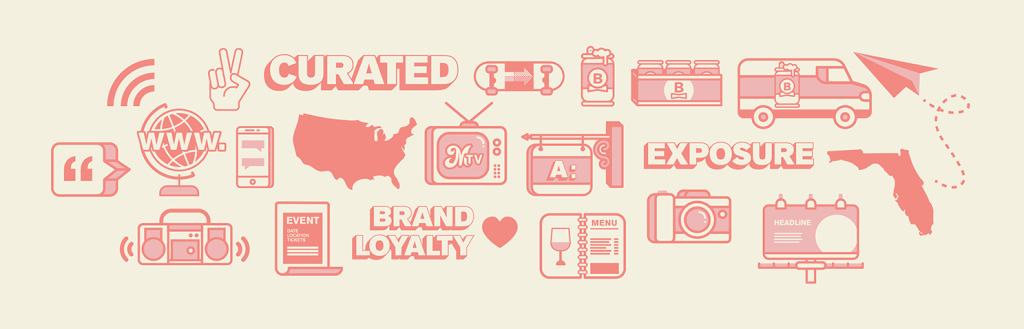
A modern agency is a multimedia powerhouse. You aren't just buying "an ad." You're buying a system of assets that typically includes:
Design systems: The visual rulebook for your brand.
Web design and UX: Custom landing pages and sites designed to convert traffic.
Digital ad creative: Static images, carousels, and short-form video.
Video and motion content: Motion graphics ads for social and paid placements, brand films, testimonials, product demos, and explainer videos that simplify complex products and B2B offerings through clear storytelling.
Print and out-of-home: Billboards, brochures, and physical collateral for when digital isn't enough.
A good agency doesn't just produce these as one-offs; they build a library of reusable creative that can live across channels.
What's the Team Makeup of an Agency?
The "village" concept is real. Great work is rarely the result of one superhero doing everything. Ad Agency Services give you access to a roster of roles that would cost a fortune to hire full-time:
Account/Project Manager: Keeps the trains running on time, managing timelines and approvals.
Strategist: Maps out the audience, positioning, and funnel logic.
Creative Director: Ensures taste, consistency, and big-picture cohesion.
Copywriter: Handles message clarity, scripts, ads, and landing copy.
Designer: The visual artist handling brand, layout, web, and systems.
Motion Designer/Animator: Brings static assets to life with After Effects and kinetic type.
Developer: Turns design into code for web and performance.
Media Buyer: Manages the budget, testing, and optimization.
If you're hiring one freelancer to do all of this, you might save money upfront—but you're buying a lot of risk. Agencies mitigate that risk with a diverse team.
At What Point Should I Hire an Advertising Agency?
This is the million-dollar question. You're usually ready when:
You have a real offer that sells. You have proof of concept. People want what you have; you just need to find more people.
You need more attention. You've tapped out your organic network and referrals.
Your brand looks inconsistent. You're embarrassed to send people to your website, or your social feed looks like a ransom note of different styles.
You're tired of reinventing the wheel. You want a system, not just a scramble for assets every time you need to post.
Performance is weak. You're spending money on ads, but the ROI isn't there because the creative isn't resonating.
Your team is stretched. You're trying to be the CEO and the CMO and the graphic designer.
However, if you're still unsure what you sell or who it's for, don't hire an agency for ads yet. Hire them for strategy and branding first. Fix the foundation before you build the penthouse.
When In-House Isn’t Enough: Overflow Support That Actually Helps
You have an in-house design team but you still need an agency when the demand outgrows the bandwidth or you need specialist skills your team doesn’t carry day-to-day (media strategy, campaign creative, motion, landing page CRO, etc.).
This is very normal: a 2023 The ANA study revealed that 82% of marketers said they had in-house agency capabilities, but 92% still deal with outside agencies, usually to handle overflow or to get skills that aren't available in-house.
What ROI Can I Expect from Ad Agency Services?
ROI isn't always a direct line to "cash in the bank tomorrow," though that's the ultimate goal. A good agency ties work to measurable signals across the funnel:
Awareness goals: Are we reaching more people? Is our view-through rate healthy? Is brand recall going up?
Consideration: Are people clicking? Are they staying on the landing page? Are they engaging with the content?
Conversion: Is the conversion rate improving? Is the cost per acquisition stabilizing? Is the sales cycle getting shorter because the leads are better educated?
Not everything is instantly measurable, but everything should be intentional.
A Real-World Example: Why the Sequence Matters
Let's look at a hypothetical scenario. A company has a solid service, but their website looks like it was built in 2014. Their messaging is vague ("We do excellence!"), and their ads are generic stock photos.
They decide to run paid ads anyway because they need leads. Traffic increases, but conversions don't. They burn $10,000 and blame the ads.
Why? Because attention is hitting friction.
A good agency like Mighty Fine Co. would tighten the sequence, such as:
Clarify the message and the proof points.
Align the brand identity so it builds trust instantly.
Rebuild the landing page experience so it's fast, frictionless, and corresponds to the ad copy.
Launch motion and paid creative that is actually built for the funnel.
Optimize based on the data.
The spending might be the same, but the system is different. That's how you stop guessing and start scaling.
How to Choose a Good Agency
Ready to look for a partner? Use this checklist to filter out the noise:
Can they show real work? Don't just look at the logo; ask why it worked.
Do they have a documented process? Do they have approval checkpoints, or do they just "wing it"?
Do they talk about distribution? A pretty video might go unseen if it's not placed on the right channel.
Do they protect brand consistency? Do they care about guidelines and design systems?
Do they lead with curiosity? If they aren't asking you hard questions about your business, they're making assumptions.

Final Thought: What an Advertising Agency Really Does
At the end of the day, a great agency isn't just a vendor that hands over a video file or a logo pack.
They're building a system where your brand is clear, your design is consistent, your UX is frictionless, and your campaigns are compelling. They're the engine builders who ensure that when you pour fuel on the fire, it burns bright instead of blowing up in your face.
That's the real function: transforming creativity into a repeatable business advantage.
At Mighty Fine Co., we don't just adapt to change; we evolve it. We take you to the people you want to know and the places you want to be. If you're ready to stop shouting into the void and start making meaningful connections, we should talk.