

This article was updated on 12/16/2025
A Quick History of Content Marketing
In 1996, John Oppedahl is often credited with an early use of the term ‘content marketing’. Although the idea of marketing professionals creating engaging content that people can use to attract customers has been around for a long time.
In 1895, John Deere launched The Furrow—not to sell tractors, but to help farmers farm better. By sharing practical insights on land management, crop yields, and new techniques. They created value first impressions. The result? Better harvests and a natural demand for more equipment.
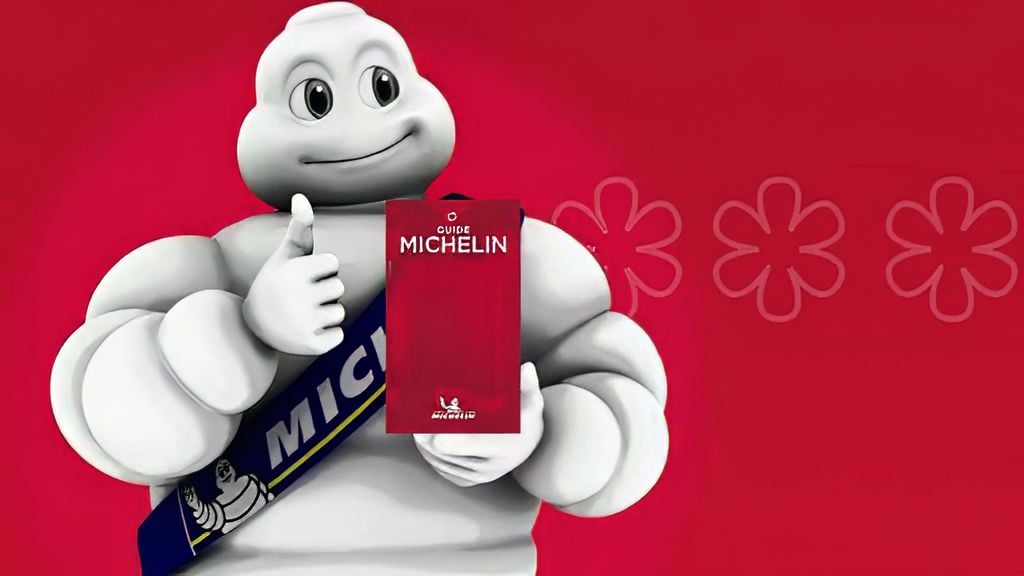
In 1900, Michelin published a free guide filled with maps, tire repair tips, and places to eat or stay, encouraging people to drive more (and wear out their tires). What started as a utility guide turned into the world’s most prestigious restaurant rating system.
A tire company wrote a guide. The world followed it to dinner. That’s the power of great content.
It’s safe to say, content marking has staying power. Content marketing didn’t start as a buzzword but it was a tactic. Long before algorithms, useful and well-thought-out material generated trust. The delivery has evolved, but the idea is still the same: put people first and the business will follow.
Video: The Benefits, Strategy, and Why It Works

Click here for Video Transcript for Hard of Hearing
If you’ve ever Googled a question, read a helpful article, or watched a how-to video, congratulations—you’ve experienced content marketing.
It’s simple at its core: create and share valuable information that attracts your audience, earns their trust, and moves them toward taking action.
That could be blog posts, videos, podcasts, infographics, guides—you name it. If it’s helpful, relevant, and connects with the right people, it’s content marketing.
Content marketing meets people where they are. They’re already searching for answers, solutions, or inspiration, and your content provides it.
Unlike traditional ads that interrupt, content marketing feels organic and welcoming. Done right, it builds trust, authority, and relationships that last far beyond a single click or sale.
The benefits: Brand Awareness & Credibility
Show up consistently with valuable insights, and people will see you as the go-to resource.
Traffic & Engagement: Quality content draws visitors in and keeps them exploring.
Lead Generation: Guides, webinars, and case studies turn visitors into leads.
Customer Loyalty: Regular, relevant content keeps your audience coming back for more.
You want people to perceive you as the thought leader in your business or industry.
Cost-Effectiveness: Often cheaper and longer-lasting than paid ads.
Types of content that work—variety is key. Blogs still have SEO power. Video dominates social feeds and boosts engagement. Podcasts and webinars build deep connections. Infographics make complex ideas click in seconds. And short-form content: reels, youtube shorts is perfect for quick brand impressions.
Where it happens: Content thrives on TikTok, Instagram, LinkedIn, Reddit, even Twitch. Each platform has its own audience and tone. The trick is matching your content to the right place and audience.
Strategy matters; content without a plan is just noise. Start with clear goals and measurable KPIs. Define exactly who you’re talking to, choose formats and channels that fit, set a budget, and keep a content calendar to stay consistent.
The best bit of advice in any endeavor is always playing the long game. Content marketing isn’t about instant wins. It’s about building a foundation that compounds over time. More trust, more reach, more opportunities.
And an old saying I like in the business: Nobody reads ads. People read what interests them. Sometimes it’s an ad.
The brands that win aren’t the ones shouting the loudest—they’re the ones telling the best stories, in the right place, at the right time.
What Content Marketing Is and Why It Still Works
What Is Content Marketing?
Content marketing refers to a business sharing information online with a target market in order to achieve its marketing goals. While this definition may appear straightforward, a deeper understanding is necessary.
Content is simply information. More specifically, the term “content” comprises stories, messages, instructions, entertainment, and more, delivered in a variety of formats across multiple channels. As it relates to content marketing, content should also be engaging, relevant, and targeted.
Benefits of Content Marketing
Content marketing offers a wealth of benefits for businesses looking to enhance their online presence and connect with their audience. One of the primary advantages is increased brand awareness and credibility. By consistently creating and sharing valuable content, businesses can position themselves as thought leaders in their industry, which helps build trust with their audience.
71% of customers want individualized experiences, and 76% get frustrated when they don’t get them. McKinsey Research
Improved website traffic and engagement are other significant benefits. High-quality content attracts visitors to your site, keeps them engaged, and encourages them to explore more of what you have to offer. This, in turn, can lead to the generation of high-quality leads and conversions, as well as enhanced customer loyalty and retention.
Compared to traditional advertising methods, content marketing is often more cost-effective. It allows businesses to reach their target audience without the high costs associated with traditional media. Additionally, content marketing can improve search engine rankings and visibility, making it easier for potential customers to find your business online.
Social media engagement and sharing are also boosted through content marketing. When you create content that resonates with your audience, they are more likely to share it on their social media channels, further increasing your exposure and influence. Moreover, content marketing enables businesses to nurture leads and guide them through the sales funnel, providing valuable information at each stage of their journey.
Finally, content marketing offers improved customer insights. By analyzing how your audience interacts with your content, you can gain a better understanding of their needs and preferences, allowing you to refine your marketing strategy and create even more effective content in the future.

What Are Marketing Goals?
Marketing goals are the objectives included in a brand’s marketing plan. They are benchmarks that must be achieved for that plan to succeed and, ultimately, for the company to do well.
Some common marketing goals include:
- Increasing brand awareness
- Boosting engagement
- Earning more qualified leads
- Building customer loyalty
Businesses’ successful content marketing campaigns include content that aligns with their marketing goals. Most importantly, you are providing information that people are searching for, answering questions they might have.
Why Does Content Marketing Work?
Content marketing works because it meets users where they are. It’s a form of inbound marketing, which means that it’s responsive to what users need. Content marketing is something that people encounter because they have asked a question, presented a problem, or shown interest in a particular problem. When executed correctly, content marketing is relevant and organic to the current user experience.
Creating high-quality content is a fundamental component of content marketing, aimed at attracting and nurturing potential customers by producing and curating various forms of content to educate and engage audiences, ultimately leading to increased brand recognition and conversions.

Contrast this definition with outbound marketing methods that often feel intrusive and disruptive to the user experience.
Since content marketing is generally well-received, brands can take advantage of it to achieve outcomes that aren’t possible through other forms of marketing. Through content marketing, businesses can:
- Build customer relationships and loyalty
- Turn customers into brand advocates
- Develop communities around brand and products
- Provide product education
- Increase brand authority
- Boost awareness
These outcomes may not result in sales as quickly as more aggressive forms of marketing, but the long-term results are often much more substantial and lasting.
Types of Content Marketing
Content marketing comes in various forms, each with its own unique way of engaging the target audience. Blogging is one of the most common types, involving the creation and publication of articles on a company blog. This helps attract and engage readers, providing valuable information that addresses their needs and interests.
Video content is another powerful format, especially on social media platforms like YouTube, Instagram, and TikTok. Videos can range from product demonstrations and how-to guides to live streams and short clips, all designed to capture the audience’s attention and convey messages effectively. Videos are effortless to consume!
Social media marketing involves creating and sharing content on platforms such as Facebook, Twitter, and LinkedIn. This type of content marketing is crucial for engaging with the target audience, fostering community, and driving traffic to your website.
Email marketing is a targeted approach, sending personalized emails to subscribers to nurture leads and drive conversions.
Infographics, on the other hand, use visual content to communicate complex information in a simple and engaging way, making it easier for the audience to understand and retain the information.
Podcasting is growing in popularity, offering audio content that attracts and engages listeners. E-books and whitepapers provide in-depth guides and reports, establishing thought leadership and expertise in the industry. Webinars are another effective format, hosting online presentations and workshops to educate and engage with the audience.
Lastly, case studies and customer testimonials share real-life examples and success stories, building credibility and trust with prospective customers. These various types of content marketing allow businesses to reach their audience in multiple ways, ensuring a comprehensive and effective marketing strategy.
Content and the Marketing Funnel
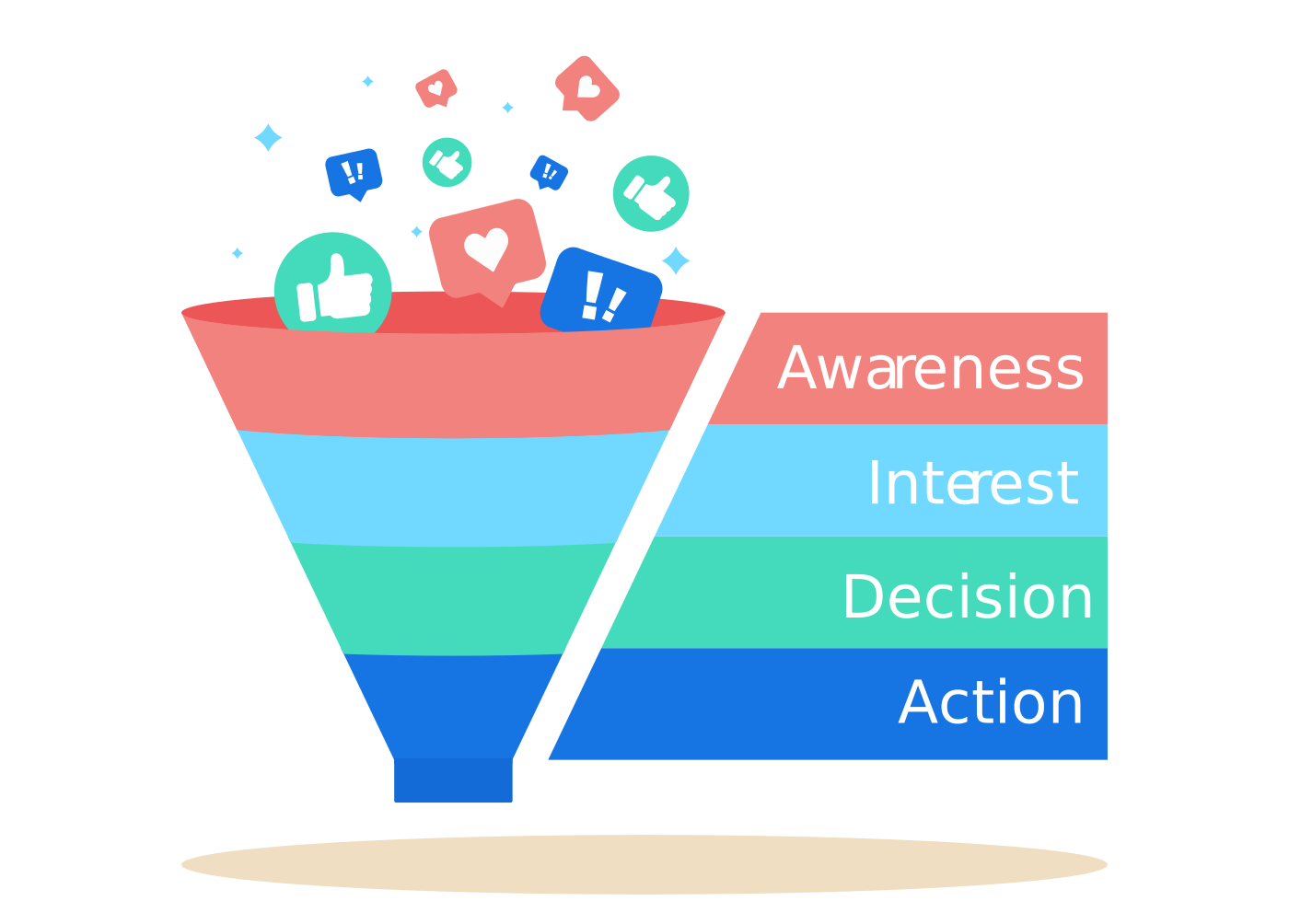
Content can support prospects at every stage of the marketing funnel—because people don’t go from “never heard of you” to “take my money” in one click.
- Upper funnel (awareness): Content that helps people discover you. Think blog posts, short videos, social content, and beginner guides that answer common questions and introduce your point of view.
- Mid funnel (consideration): Content that helps them compare and understand what you do. Think explainers, case studies, webinars, product pages, FAQs, and “how it works” content that removes doubt and builds trust.
- Lower funnel (conversion): Content that helps them decide. Think testimonials, demos, pricing pages, ROI calculators, landing pages, and strong calls-to-action that make the next step easy.
Advertising often shows up heaviest at the bottom of the funnel (retargeting, offers, “book a call”), but content is what warms the audience up so your ads don’t feel like they’re coming out of nowhere.

Where Does Content Marketing Happen Now?
One of the biggest ongoing changes to content marketing has been concerning where it takes place. Specifically, the channels that are available for sharing content with target audiences have grown exponentially. So, where is that happening now?
Content marketing doesn’t live in one place – because that’s just how it has to be. Audiences are now all over the place – searching on the engines, sharing on social, watching videos, checking their email, listening to podcasts & hanging out in communities . And the truth is, they’re not just checking one place before making a move – they’re bouncing all over the place before finally taking action.
You can’t rely on just one channel any more as the numbers show – Axios reported that search referrals to publishers dropped of by a whopping 15%+ between May 2024 & Feb 2025 . That’s a pretty big sign that things have changed: even if your stuff is really good, it can’t just rely on Google alone to bring in traffic anymore.
In short content marketing today has to be distributed. The winners are the ones who take a idea and turn it into something new in different places – like turning a blog post into social clips or an infographic into a carousel . Each channel does its own thing, reaching a different crowd in a different spot, at a different time & with a different set of motivations.
The point is simple & clear: content still counts, but where you put it counts just as much. Using loads of channels is the way to make sure your message doesn’t vanish when the algorithm changes – and it lets your words meet people in the places they already are hanging out – rather than just waiting for them to come to you.
If you are wondering where people find your content, the answer is easy: Web analytics will help you find your way through the digital wilderness. Using quantitative and qualitative data, the right tools, and meaningful benchmarks is important for making smart choices.
Content Marketing Formats
The Content itself is just the start – its how you present it that’s just as vital. How does your content show up to the world matters almost as much as what you’re actually saying. Different formats of content have different jobs to do, different audiences to speak to, and different touch points in the buyer’s journey or sales funnel.
Some formats are basically about getting people to notice you, others are about teaching people, and building trust, and still others are all about moving people along to the point where they make a decision.
Here are some of the actual content formats brands are using to reach, educate and convert their audiences:
- Blog posts and articles – good for people to stumble upon you, to see you as a thought leader, and to get some decent SEO out of the deal
- Guest posts so you can tap into new people and build a bit of credibility at the same time
- Surveys and polls – because in some cases you need to get people engaged and to generate some real original insights
- Podcasts and interviews because nothing beats a good long-form story to build a real relationship with people
- Webinars – good for educating people, showing off how clever you are, and capturing a few leads in the process
- eBooks and white papers – deep research, deep strategy, and some gated content to make sure you actually get read
- Infographics – these are great for simplifying some of the more complex stuff and for getting people to go ahead and share it
- Courses and manuals – good for getting people on board, for training them up, and for giving them a bit of long term value
- Native advertising – this is basically a way of promoting your content that doesn’t feel like an advert at all.

Tip: Blog posts can generate organic traffic, and you can incorporate many of the above formats to make your content more interesting. Wonder how you landed on this article? This article was designed to answer your search query and others based on research and writing content for SEO purposes.
This follows a new Google concept called E-E-A-T (Experience, Expertise, Authoritativeness, and trustworthiness). Use Google’s own reference guide to dig in deeper into the concept.
And then there’s video – which honestly should have its own category in content marketing, not just because it’s super popular, but because it comes in so many different flavors and just naturally fits into how people learn, explore & make decisions today. Just like the one in this article.
Video content takes all sorts of forms, such as:
- Live video – straight from the source, no filter – it feels raw and instant
- Explainer vids that break down complicated ideas in no time – it’s effortless
- Demos that show, rather than tell, what’s on offer
- How to vids (we’ve all been there, struggling with an IKEA instruction manual) – essential, right?
- Video courses that really dig deep & establish you as a thought leader
- Short-form videos like Shorts, TikToks & Reels that crunch through info in seconds & catch people’s attention before they even know it
The point is, you don’t need to use every format going – you just need to pick the ones that make sense for your audience & where they are. When you tie your video formats to what people actually want to do, your message finally lands, feels genuinely useful, & drives better outcomes.
Content Management and Personalization
The cornerstone of any fruitful content marketing campaign must be content management and personalization. The first step is to fully understand your target demographic, including their likes and dislikes, habits, and motivations. Once you have that down, you can make engaging, high-quality content that speaks to their needs.
Examining data and analytics allows you to observe the performance of your content, identify its strengths and weaknesses, and make necessary adjustments. This way, you can ensure that your content is meeting the needs of your audience and contributing to your marketing goals. Marketing automation tools and a content calendar make it simple to reach a large audience with personalized messaging.
In addition to streamlining processes and allowing you to keep everything in one place, a quality content management system (CMS) also allows you to monitor your material and ensure that it remains correct and relevant across all of your platforms of use. Your ability to connect with consumers, hold their interest, and generate revenue is greatly enhanced when you master content management and personalization.

Content Marketing and Search Engines
Content marketing is a cornerstone of SEO, boosting visibility and rankings on search engines. By creating high-quality, keyword-rich content that resonates with your audience, you address their search queries while establishing credibility.
To optimize content for discoverability, use targeted keywords, meta tags, and other SEO techniques. Building high-quality backlinks further strengthens your site’s authority and improves its ranking. Valuable, consistently published content also drives traffic and engagement—key signals that tell search engines your site is a reliable resource.
Tracking performance with SEO metrics and analytics tools provides data-driven insights for continual refinement. Establishing thought leadership through informative content enhances your credibility, making it more likely for search engines to rank your pages higher.
By integrating content marketing with SEO, you create a powerful strategy that attracts more visitors, encourages engagement, and leads to profitable customer actions.
Setting Content Marketing Strategy For the Future
Now that you have a solid foundation in content marketing, the next step is turning that knowledge into a strategy you can actually execute.
A strong content marketing strategy doesn’t mean locking yourself into a rigid, multi-year plan. Instead, it means documenting clear goals, defining success metrics, and working from a flexible roadmap. That journey can evolve as platforms, audiences, and performance data change.
Many teams find success planning in shorter, focused cycles. Don’t get overwhelmed and think about planning in quarterly cycles leaning into a 6-12 month strategic plan. Pair that with an integrated content calendar, and you create a system that’s structured enough to stay consistent, but flexible enough to adapt when something isn’t working.
The goal isn’t perfection. It’s momentum, clarity, and the ability to make smarter decisions over time. The tips below will help you build a content strategy that’s practical, measurable, and built to perform both now and in the months ahead.
Start with Goals
Content without a goal supporting it doesn’t really serve a purpose. You might deliver some pieces that your audience enjoys, but there won’t be any movement toward any sort of positive outcome.
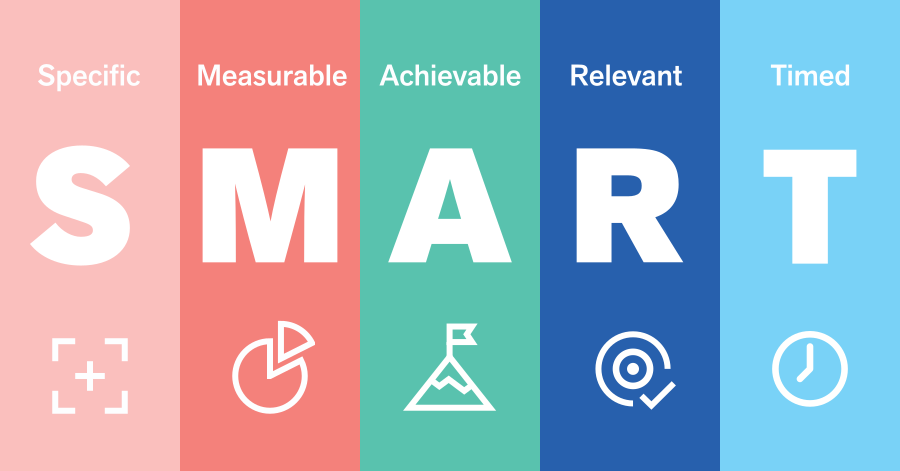
One of the most effective approaches is to use the SMART methodology, setting goals that are Specific, Measurable, Achievable, Relevant, and Timely. Doing so pushes you to set content marketing goals that are well-articulated, aligned with your overall business objectives, and trackable using clearly defined metrics.
Some example goals include:
- Increasing brand awareness by 20% in six months
- Boosting revenue through social media sales by 5% in 90 days
- Earning 25% more email subscribers in one month
Establish KPIs
Once your goals are clear, you can set key performance indicators (KPIs)—specific, measurable targets your content should hit by a certain date. Think of KPIs as the scoreboard: they tell you whether your strategy is actually working.
For example, if your goal is to increase brand awareness, your KPIs might include:
- More search traffic from branded keywords (people typing your business name or branded terms)
- Higher social engagement (follows, shares, comments, saves)
- Stronger visibility in Google Trends for your brand name
- Brand awareness surveys (how familiar customers are with your company or products)
- Share of voice / share of impressions (how often you show up compared to competitors)
Before you start tracking progress, it helps to run a quick current-state of your baseline. That way, you’re measuring improvement against real benchmarks, not guessing.
Select Content to Reach Your Audience: Buyer Persona
What kind of content should you create? You’ll need to take your content audience into consideration alongside your goals and KPIs.
Start by developing buyer personas, which will help you dial in exactly who you are trying to reach with this content marketing initiative. The ultimate goal of content marketing is to drive profitable customer action by creating valuable and consistent content that attracts and retains a specific audience.

Your buyer persona should include details such as:
- Demographic data
- Pain points
- Reasons for needing your product or service
- Where they spend time online
- Marketing funnel stage
- How your brand can uniquely meet their needs
Remember, though, that not every content marketing campaign will be intended to reach all of your prospective customers. You may need to specialize to achieve results. Sometimes you need to think out side of the box!
Once you have a clear view of the customers you want to reach, along with their needs, you can choose the content types that will be most effective.
Select Your Content Channels
You have two things to ask yourself here. First, where will you create and host your content? For example, you can create videos to be hosted on YouTube or blog posts on your website.
Next, which channels will you use to promote or distribute that content? Videos can be shared on Facebook and other social media channels, and you can distribute blog posts to a larger audience by posting them on Medium or other channels in addition to your own website.
Establish a Marketing Budget
Content marketing isn’t “free”—but it is flexible. What you spend depends on what you’re creating, where you’re distributing it, and how aggressive your goals are. As you plan, here are the common cost buckets to consider:
- Tools and subscriptions for creation, scheduling, distribution, and analytics
- Equipment costs (cameras, lighting, audio, editing software, etc.)
- Creative support from agencies, writers, designers, or videographers
- Paid promotion (boosted posts, ads, sponsored placements, influencer/creator fees, etc.)
The good news: a lot of these costs aren’t one-and-done. Equipment and tools can be used across multiple campaigns, which helps spread the investment over time.
And the same goes for the content itself. A strong piece of content—especially a professionally produced video—can get serious mileage. One shoot can turn into multiple assets: a homepage video, short social clips, ad variations, email embeds, landing page support, and even still frames for graphics. In other words, you’re not just paying for “one video”—you’re building a content engine you can reuse across channels.
Create and Share Content
Put your strategy to work. Start creating and distributing the content you have planned based on your marketing goals. A content calendar is an excellent tool. You can use it to plan a steady output of content to keep your audience engaged and slowly work toward achieving your KPIs.

Employ Ongoing Analytics With The Right Tools
Go back to your goals and KPIs. Track them using analytics tools that give you clear, actionable insights—so you can make small adjustments over time and keep improving results.
The pros employ these top analytic tools:
- Meta / LinkedIn / TikTok analytics (if you run social): creative performance, CTR, conversion tracking, and audience signals
- Google Analytics 4 (GA4): engagement, traffic quality, conversions, and user paths
- Google Search Console: search queries, rankings, impressions/CTR, indexing issues, Core Web Vitals
- Ahrefs: keyword opportunities, backlink profile, competitor gaps, content performance
- Google Tag Manager: clean event tracking (button clicks, form submits, scroll depth)
- Looker Studio: dashboards that combine GA4 + Search Console + ad data in one view
- Hotjar: heatmaps + session recordings to spot friction and drop-off points
- SEMrush or Moz: solid alternatives for keyword tracking, audits, and competitive research
- YouTube Analytics (if you publish video): retention, click-through rate, and audience behavior
Some Top Marketing Channels at a Glance
- Your Website Blog (Owned Media) — The best “free” long-term channel. Posts compound over time through search traffic, internal linking, and authority-building. Bonus: A blog post can also host most other marketing content to become a rich resource of information.
- Email Newsletter (Owned, High-Control) — The most reliable way to bring people back. Great for nurturing leads, launching offers, and distributing every new post/video.
- YouTube — Evergreen video discovery. Ideal for how-tos, explainers, demos, and anything people search for repeatedly.
- LinkedIn — Best for B2B visibility and credibility. Strong for thought leadership, partnerships, recruiting, and relationship-building.
- Instagram — Strong for brand presence and short-form education. Great for behind-the-scenes, proof, culture, and visuals that build trust.
- TikTok — High discovery potential with short, punchy educational content. Works best when you keep it simple, human, and consistent.
- Facebook — Still valuable for communities (Groups), local audiences, and paid retargeting support.
- Reddit — Intent-heavy communities where trust matters. Great for research, learning customer language, and soft participation (avoid hard selling).
- Pinterest — Evergreen discovery for specific niches (home, food, DIY, lifestyle, ecommerce). Posts can drive traffic for months.
- X (Twitter) — Fast takes, commentary, and networking. Good for visibility and conversation, less dependable for long-term traffic.

It’s a Wrap: Bridging a Marketing Gap with Content
People are resistant to marketing for one simple reason: they don’t want to be sold to 24/7—especially when they’re just trying to enjoy their time online.
Content marketing helps you earn attention instead of interrupting it. You show up with something useful, interesting, or entertaining, and that goodwill carries farther than a hard sell ever could. Or as the old line goes: “Nobody reads ads. People read what interests them. Sometimes it’s an ad.”
The Content Marketing Institute has pointed to examples of data-driven content—like standout infographics that drive shares and site visits—as proof that when content is genuinely helpful, people spread it for you.
So what do you want your content to do? Build awareness. Generate leads. Educate customers. Move people toward a decision. Whatever the goal, the best content gives your audience a reason to trust you before you ask for the sale.
We’d love to partner with you as you build a content engine that supports your marketing goals. Contact Mighty Fine for help with web design, advertising, branding, and content strategy.