

Let’s be real: programmatic advertising changed the ad game because it changed how media gets bought. Media buying used to be manual and relationship; phone calls, negotiations, insertion orders, and a lot of educated guessing and luck. There was strategy involved, but the execution was slow, fragmented, and hard to optimize in real time.
Programmatic flips that script. Instead of buying space directly from a publisher, advertisers use platforms that evaluate the opportunity in millisecond, then bid for the impression based on audience signals, context, and performance data. Strategy didn’t disappear. It moved upstream: you define the audience, budget, creative, and outcomes. Technology handles speed, scale, and continuous optimization.
In other words: it’s not “set it and forget it.” It’s “set it, manage it, and get sharper every week.”
And the trend is clear: programmatic represents the majority of modern digital display buying, and for many brands it’s now the default path to scalable targeting and measurable performance.
Video: Programmatic Advertising Explained in Under Two Minutes

If you want the deeper version—with the jargon decoded and the moving parts made simple—start here.
Your Guide to Programmatic Advertising
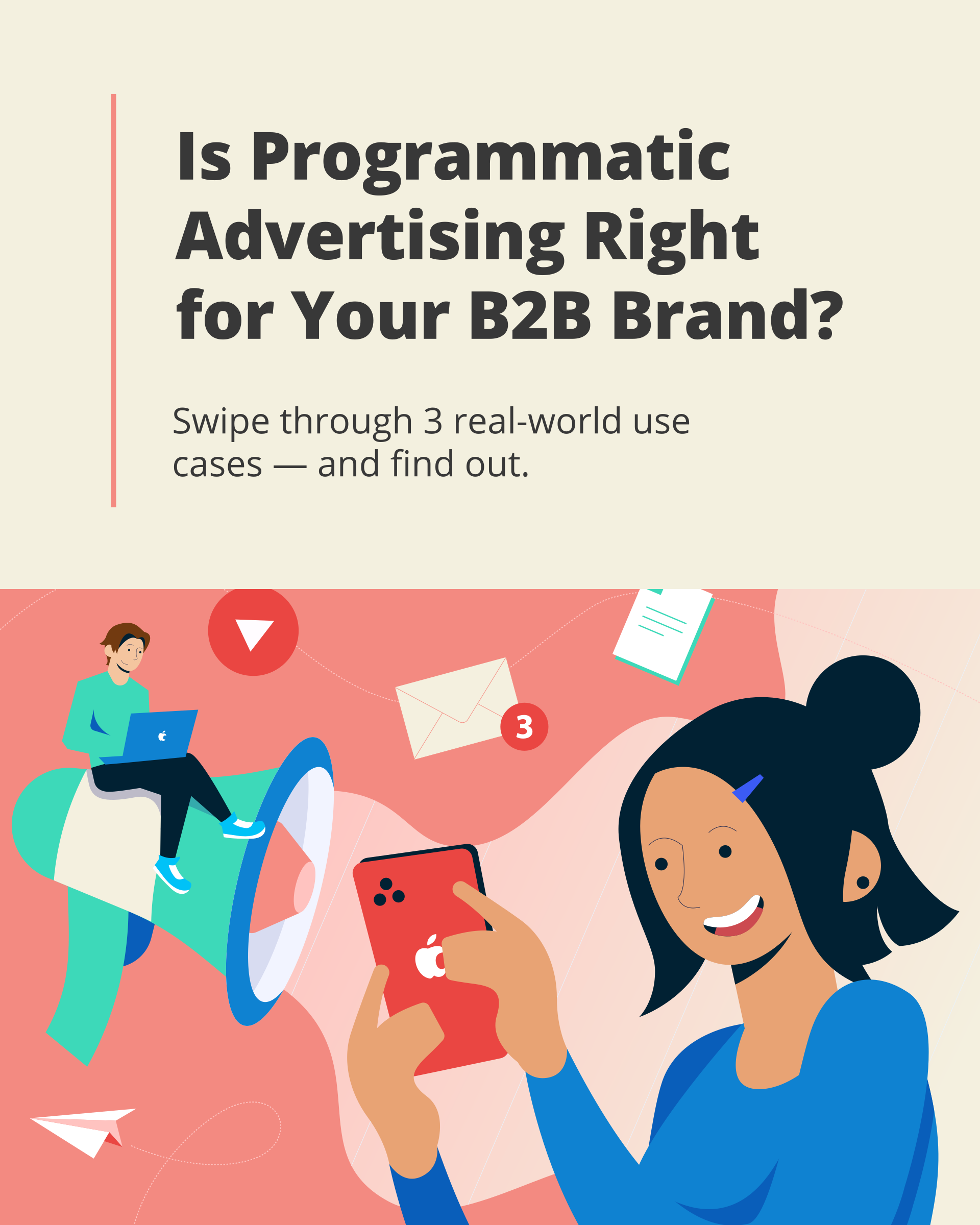
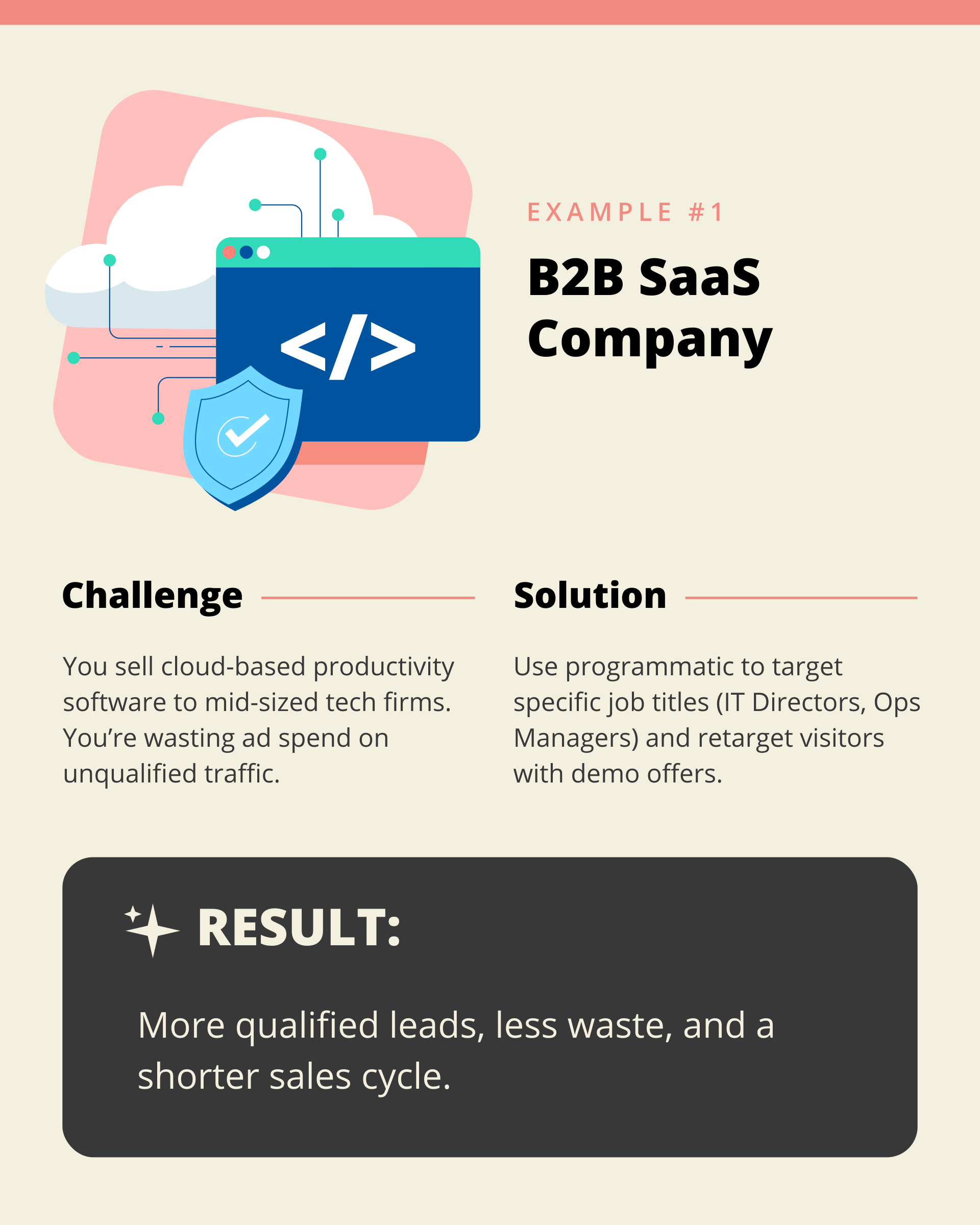
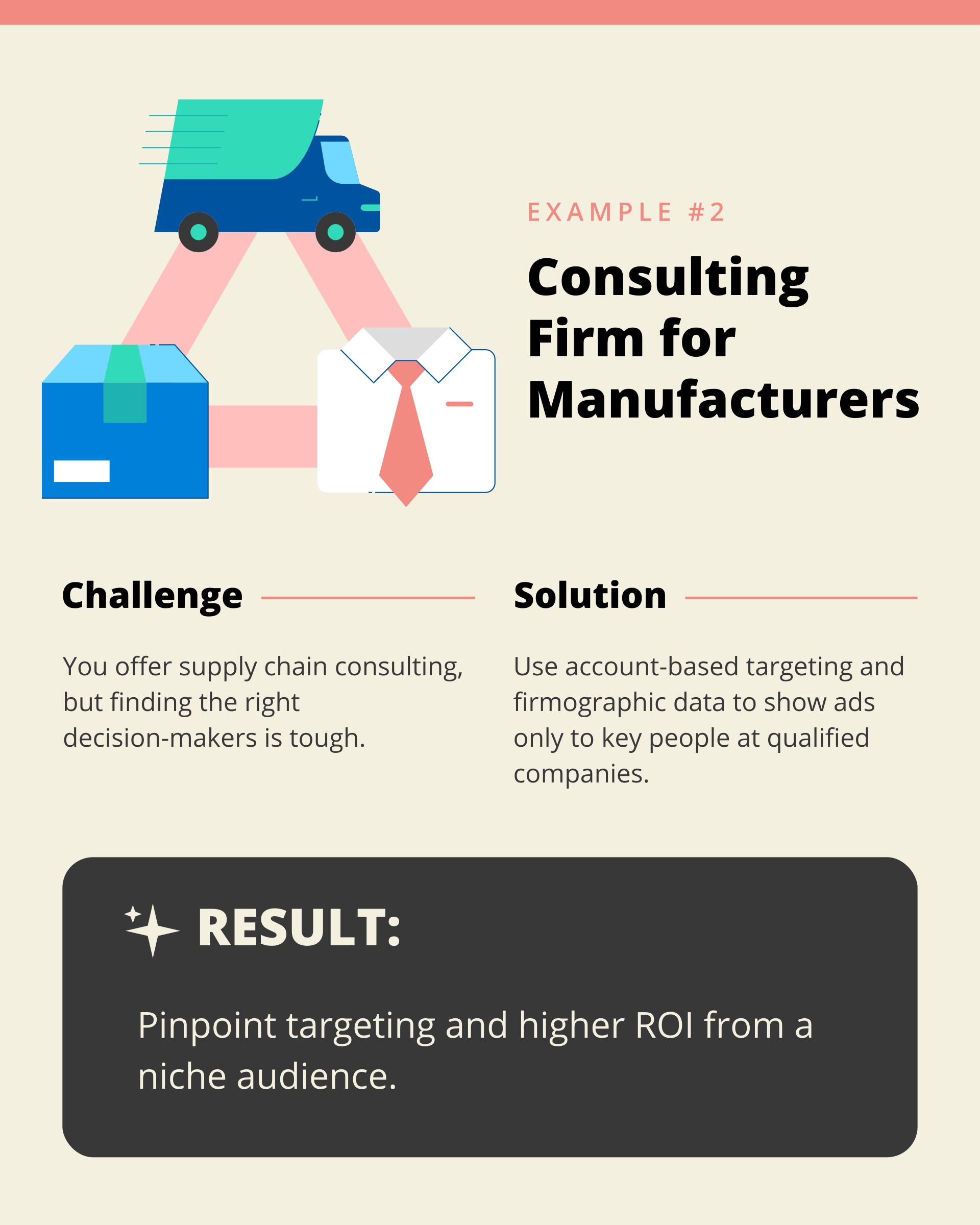
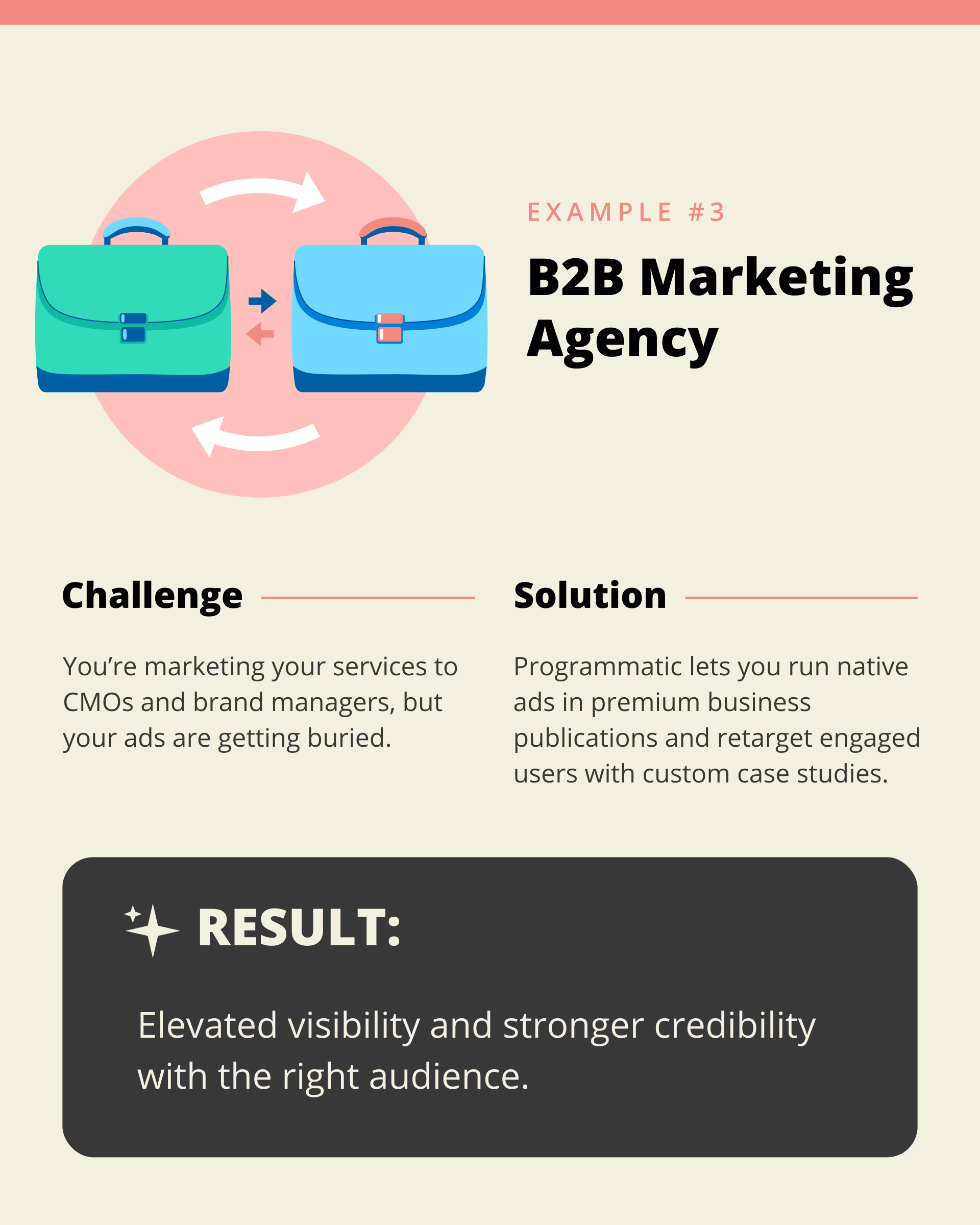
Here are 3 quick case studies to show how it works in real life.
What Is Programmatic Advertising?
Programmatic advertising is the automated buying and selling of digital ad inventory, powered by data and real-time decisioning. It places ads with speed and precision that traditional methods can’t match across websites, apps, video platforms, and connected TV.
But here’s the part people miss: automation doesn’t equal success by default. Technology can move fast, but it can also move fast in the wrong direction. The campaigns that win have clear goals, strong creative, clean data, and someone actively steering the ship. It’s a combination of human creativity programed for robots.
At Mighty Fine Co., we love programmatic because when it’s managed correctly, it’s not just efficient—it’s a growth engine.
Why Programmatic Is a Big Deal
Programmatic matters because digital attention is scattered in a scroll addicted world. People bounce between devices, platforms, streaming, apps, and a million micro-moments throughout the day. Traditional media buying struggles to keep up with that reality.
Programmatic turns that complexity into something you can actually manage. Instead of guessing where your audience will be, you use data and automation to meet them in the right context and optimize based on what’s working. It also pairs naturally with cross-channel marketing, because campaigns can be adjusted in real time to match different goals and different stages of the customer journey.
It’s in the numbers: In the U.S., programmatic digital display ad spending is projected to top $180B in 2025 and about 92% of all digital display ad spend.
From Billboards to Algorithms: The Evolution of Ad Buying
Advertising started with mass exposure: newspaper spreads, TV commercials, radio jingles. You shouted across broad channels and hoped the right people heard you.
Then digital arrived. With tools like Google Ads and display banners, targeting got smarter but buying was still manual: longer lead times, fixed placements, and a decent amount of guesswork.
Enter programmatic. With real-time bidding (RTB), machine learning, and audience data baked in, programmatic media buying automates how inventory is purchased and optimized. It didn’t just speed up the process—it made campaigns more responsive, more measurable, and more scalable.
How Programmatic Advertising Works (RTB Explained)
Let’s strip away the jargon. Here’s the basic flow of real-time bidding:
- Advertisers define goals: who they want to reach, what outcomes matter, and how much they’re willing to pay.
- A Demand-Side Platform (DSP) evaluates available impressions across publishers and exchanges—in milliseconds.
- Real-time bidding runs an auction, and the winning bid earns the impression (based on rules, targeting, and bid strategy).
- The ad renders to the user—often before the page fully loads.
This all happens while someone is still scrolling. That’s the magic and the risk: it’s incredibly powerful, but it also means your strategy, creative, and settings have to be dialed in, because the system will do exactly what you tell it to do. It’s up to you to know what channels your targeting.
The Programmatic Ecosystem (DSPs, SSPs, Exchanges, Data)
To understand programmatic, you need to understand the core players. Think of this like a marketplace with different roles on each side of the transaction.
Demand-Side Platforms (DSPs)
DSPs are where advertisers plan, launch, and optimize campaigns. They let you bid on inventory across multiple publishers and exchanges at once, with targeting based on signals like behavior, location, device, interests, and context.
Examples of leading DSPs include: Google Display & Video 360, Amazon DSP, MediaMath, AdRoll, and Adobe Advertising.
Supply-Side Platforms (SSPs)
SSPs help publishers manage, price, and sell their available ad space in real time. They connect publishers to multiple buyers and marketplaces, and they help optimize yield so publishers can monetize effectively.
Examples of leading SSPs include: Google Ad Manager, Magnite, PubMatic, and OpenX.
Ad Exchanges
Ad exchanges are the marketplaces where DSPs and SSPs meet. They facilitate the auctions and matching process, connecting advertiser demand with publisher supply in milliseconds.
Data (and Why It Matters)
Data is the fuel. It’s what allows programmatic to move beyond “spray and pray” and toward relevance. It’s also why privacy and quality matter so much. When data is clean and intentional, your targeting improves. When it’s messy, you end up paying for noise.
First-party data comes directly from your audience—website activity, CRM data, purchase behavior, email engagement. It’s typically the most valuable and the most privacy-friendly.
Second-party data is someone else’s first-party data, shared through a partnership. It can be incredibly useful when the partnership is aligned and the data is well-governed.
Third-party data is aggregated from broader sources and sold for targeting. It can expand reach, but it’s often less precise than first-party data—and the industry is steadily shifting toward privacy-first approaches that rely more on context and direct relationships. Be careful with third-party data.
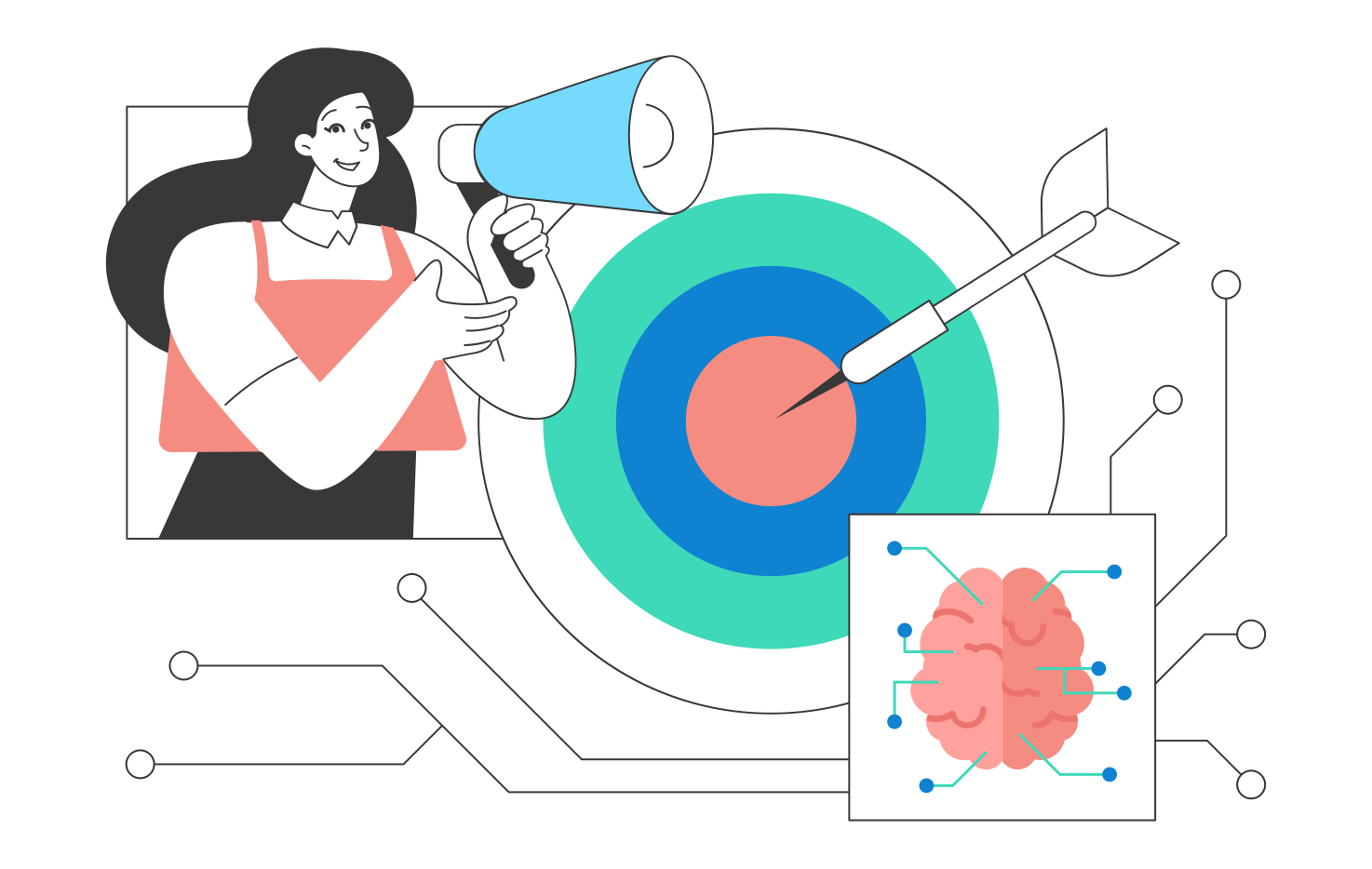
Types of Programmatic Advertising (RTB, PMP, Preferred, Guaranteed)
Programmatic isn’t one thing—it’s a few different buying methods, depending on how much access and control you want.
Real-Time Bidding (RTB): The open auction model. Impressions are bought and sold in real time, and pricing is dynamic. This is often the most flexible approach for scale and testing.
Private Marketplaces (PMPs): Invite-only auctions with premium publishers. You still bid, but access is limited to approved advertisers. PMPs are popular when brand safety, quality inventory, and tighter control matter. You control your brand messaging more precisely.
Preferred Deals: You negotiate a fixed price for inventory before it hits auction. You get priority access without the unpredictability of the open bid environment.
Programmatic Guaranteed: A direct agreement that reserves inventory at an agreed price. This is the closest thing to traditional “locked-in placement,” but handled programmatically.
Choosing the right approach is where strategy really shows up. There are 10,000 ways to make chili, the ingredients aren’t the hard part. The recipe is. Programmatic is the same: the right blend of inventory, data, and oversight is what makes it work.
Benefits of Programmatic Advertising (Efficiency, Targeting, ROI)
Programmatic isn’t just fast—it’s efficient, scalable, and precise. Here’s what that actually looks like in the real world:
More relevant reach: Instead of paying for broad exposure, you can align impressions to real audience signals—behavior, context, device type, geography, and timing.
Faster learning cycles: You can test creatives, audiences, and placements quickly, then shift budget toward what performs—without waiting for the campaign to end. A/B testing is one of the most effective ways to see what people are hitting on.
Less waste: Frequency controls, exclusions, and performance-based optimization help reduce spend on people who aren’t engaging.
Better visibility: You can see where ads ran, what inventory performed, and how results connect to spend—so decisions get less emotional and more measurable
Let’s talk about exclusions a bit more because you might waste a lot of money targeting the wrong people: Exclusions are the rules you create to prevent your advertising from being shown to persons, places, or situations that do not align with your objectives. In programming, decreasing waste is frequently not about “finding more people”; rather, it is about cutting spending where it isn’t working.
Example: “If you’re a local plumber trying to book service calls, you can exclude DIY plumbing content and low-intent placements so you’re not paying to advertise to people who are trying to fix it themselves.

Common Roadblocks (and How to Tackle Them)
Programmatic is powerful, but it’s not perfect. The biggest problems usually show up when campaigns run without active oversight.
Myth: “Set it and forget it.” programmatic runs fast, but it still needs a driver to keep budgets on track, creative direction fresh, and placements hitting the right people (instead of wearing them out).
Ad fraud and low-quality inventory: Bots and junk placements can burn budget fast. The fix is a combination of verification, allowlists/blocklists, tighter inventory controls, and reputable partners.
Privacy and compliance: Data rules are tightening and cookies are changing, so the smart move is to lean harder on first-party data, contextual targeting, and clear, transparent data practices.
Bottom line: the campaigns that win are actively managed, creatively strong, and powered by clean, reliable inputs.
What’s Next: The Future of Programmatic
The next era of programmatic is already here and it’s getting smarter. The biggest shift isn’t just “more automation.” It’s better decisioning across more channels, with more privacy-first constraints.
Creative
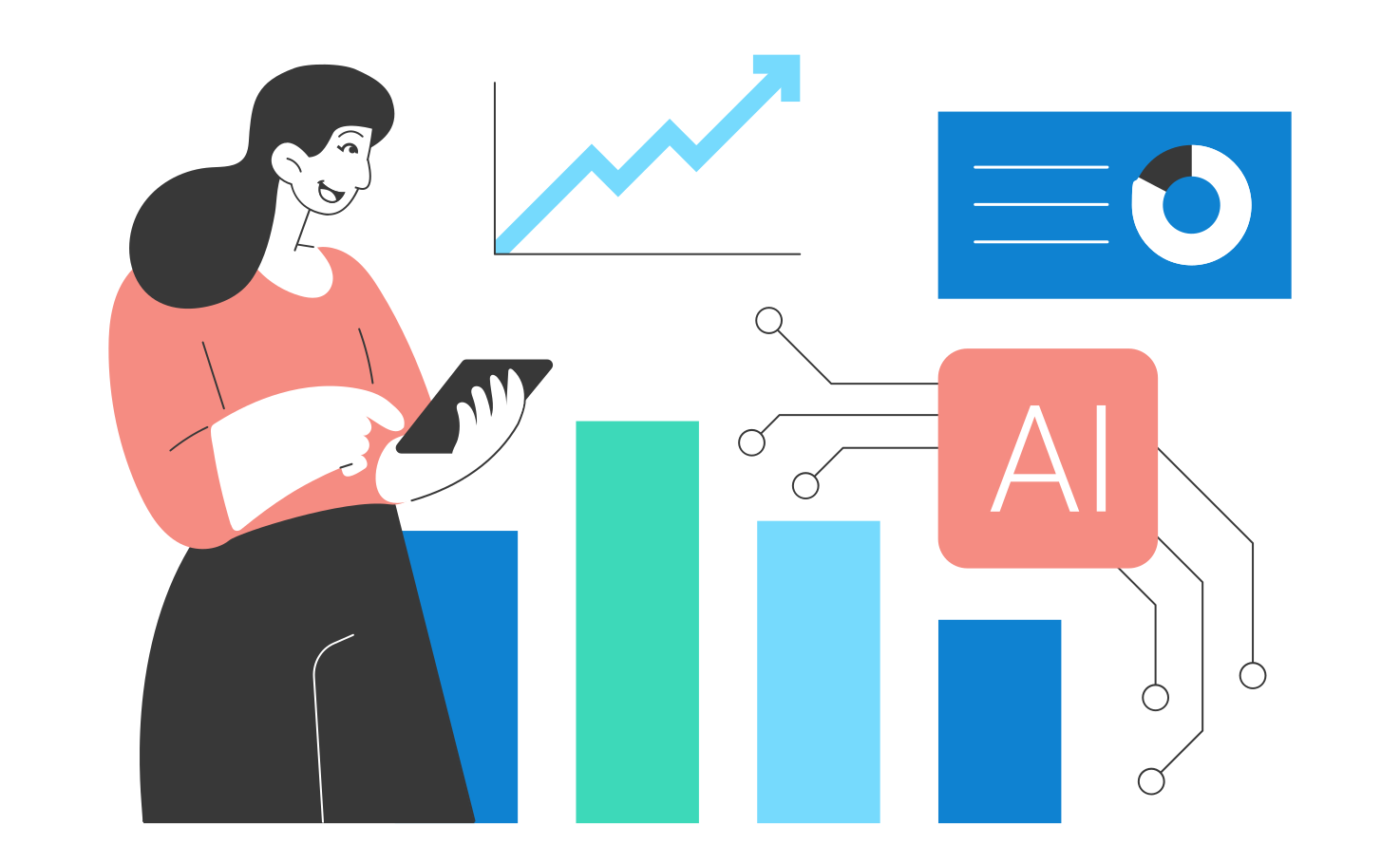
AI and machine learning: Expect sharper optimization, better prediction, and more dynamic creative decisioning.
More channels: Programmatic keeps expanding beyond banners; connected TV (CTV), digital out-of-home (DOOH), streaming audio, and in-game placements continue to mature.
Privacy-first models: As tracking changes, more campaigns are shifting toward contextual targeting, first-party data, and privacy-safe “clean rooms” that let brands use insights without exposing personal information.

Best Practices for Programmatic Success
If you want programmatic to actually perform (instead of just “run”), treat it like a living strategy:
Human creativity. AI can fill in the gaps but lean on creative content that made by humans.
Start with one clear outcome. Awareness, lead quality, conversions—pick the primary goal so your bidding and measurement aren’t fighting each other.
Build your data house first. Clean first-party data beats fancy targeting every time. The better your inputs, the smarter the machine can be.
Rotate creative on purpose. Creative fatigue is real. Plan variations, test messaging, and keep an eye on performance drop-off.
Control where you show up. Use inventory controls, exclusions, and quality checks so you’re not paying premium prices for questionable placements—because most platforms are happy to serve your ads anywhere as long as you’re paying for the impressions and clicks.
Optimize continuously. Programmatic thrives on monitoring and improvement—budget pacing, audiences, placements, and creative should all be reviewed regularly.
Programmatic thrives on iteration. The brands that treat it like a “one-time setup” usually get one-time results. The future of advertising is about be nimble, iterative and following trends within your industry.
FAQ: Programmatic Advertising
Is programmatic advertising only for big budgets?
No. The advantage is efficiency and optimization. Smaller budgets can work well when targeting and measurement are focused and realistic.
What’s the difference between a DSP and an SSP?
A DSP helps advertisers buy inventory. An SSP helps publishers sell inventory. Exchanges and marketplaces connect the two.
What’s the difference between RTB and programmatic guaranteed?
RTB is auction-based pricing and availability. Programmatic guaranteed reserves specific inventory at a fixed price through a direct agreement.
Does programmatic still work as cookies change?
Yes, but the strategy shifts. First-party data, contextual targeting, and privacy-first approaches matter more than ever.

Wrapping It Up: Why Programmatic Isn’t Optional Anymore
Programmatic advertising isn’t just “the future”—it’s already the backbone of how modern brands buy digital media. It delivers the speed, flexibility, and measurable feedback loop that traditional methods can’t compete with.
Yes, it’s complex. But complexity isn’t a dealbreaker when the plan is solid. With the right strategy, trusted platforms, strong creative, and consistent optimization, programmatic becomes more than a tactic—it becomes a repeatable growth system.
Whether you’re exploring programmatic for the first time or ready to level up what you’re already running, now’s the time to get serious. Because in a world where attention is currency, you can’t afford to waste impressions.
Need help building a smarter, more efficient ad strategy?
Mighty Fine Co advertising services can help you make programmatic work for your brand.