
7 Advertising Trends Shaping The Future
Advertising is changing faster than ever, but one thing hasn’t: brands still need campaigns that actually move revenue, not just rack up impressions.
Keeping up with advertising trends is now essential for staying competitive
According to a new forecast from ad media giant GroupM, global ad spend is expected to pass the $1 trillion mark, with around three-quarters of that money going into digital channels like search, social, video, and retail media. That tells you one thing very clearly: even in a choppy economy, companies are still betting big that advertising works.
The challenge isn’t whether to advertise. It’s how to advertise in a way that blends timeless creative principles with the tools that actually matter now: AI, video, programmatic, retail media, and the creator economy.
Below are the key advertising trends for 2025, what they mean for your bottom line, and how to put them to work in your campaigns.
These advertising trends aren’t just predictions—they’re practical shifts already shaping how brands grow.
What's Hot In Advertising Trends

Trend 1: The Creative Core Remains Unshakeable
Technology has rewritten almost every part of the media plan, but not the fundamental job of advertising: understand people and make them care about what you provide. As far as advertising trends go, the biggest constant is still creativity.”
Great campaigns still start with a sharp idea and clear positioning. That doesn’t change whether you’re building a landing page, scripting a YouTube pre-roll, or connecting a CTV spot. It’s the classic 101—knowing your audience, tapping into real human insight, and telling a story. Making content worth remembering in a feed that never stops. Here's one of my favorite quotes:
“Nobody reads ads. People read what interests them. Sometimes it’s an ad.”
That’s where creative advertising services earn their keep. A good creative agency gives you a flexible, on-demand team of creative directors, strategists, brand designers, copywriters, motion designers, media and digital specialists. All of these creative services are at your beck and call, so you don't have to maintain the overhead of a creative department. You can plug them into specific projects or keep them on retainer as your “always-on” creative engine.
The Creative Team Advantage
The best work still comes from teams, not tools. When writers, art directors, designers, and directors bounce ideas off each other, they generate concepts no single person or AI system can do on their own. Each member of a creative team brings their history, time working with clients, education in their craft and life experiences. That human creative “chemistry” is a competitive advantage.
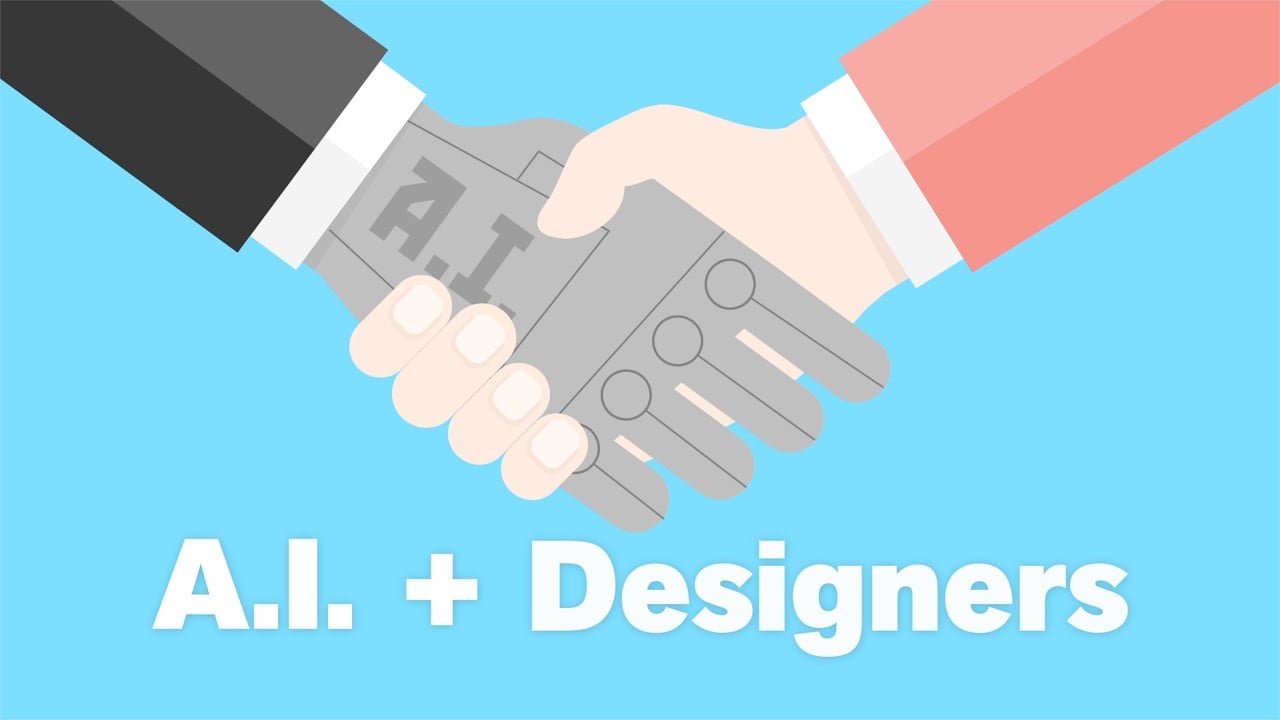
VIDEO: The Relationship Between AI and Designers Explained
Where AI Fits Into the Creative Process
AI is moving fast and it’s reshaping how designers work, but not replacing them. Tools like Midjourney, DALL·E, and Adobe Firefly are powerful for speeding up early-stage exploration: quick mood boards, rough concepts, and fast iterations.
But design is still a human endeavor—one that goes back to cave drawings. AI can generate options, but it can’t understand context, strategy, brand nuance, or the emotional spark that makes an idea resonate. Designers bring career insight, intuition and lived experiences that turn a concept into something meaningful.
The future isn’t AI versus designers; it’s designers using AI as an accelerator. Less time on repetitive production work, more time on the ideas that actually move people. If you’re tracking advertising trends closely, you’ll notice creative strategy remains the backbone of modern campaigns.
How to use this trend in 2025:
- Start with a strong creative platform or “big idea” and then adapt it to channels, not the other way around.
- Invest in brand guidelines that go beyond logos and colors—tone of voice, narrative themes, and do/don’t examples. This make everything moving forward easier because you have a playbook.
- Pair your media team with a creative director so targeting and storytelling stay connected, especially in programmatic and retail media.
- Ensure consistency from top to bottom of your marketing funnel
Trend 2: Video Becomes Your Default Ad Format
Video isn’t just another content type anymore—it’s the backbone of modern advertising. Short form video content is king! One of the most dominant advertising trends this year is the rise of video as the default format.
Neuroscience research shows that the human brain can identify images in as little as 13 milliseconds, which helps explain why visual formats grab attention so effectively. It’s no surprise that marketers continue to lean into video. Video is effortless to consume and makes buying decisions easier for your audience. Not only that but one well-produced video can be leveraged across multiple channels. That's a lot of bang for your buck!
Industry surveys show that around 90% of marketers say video gives them a good ROI, and most say it boosts brand awareness, traffic, and leads. Short-form videos, often 30–60 seconds are rated as the most effective.
In parallel, connected TV (CTV) and streaming are becoming “must buy” channels. In the US alone, CTV ad spend is projected to reach roughly $26.6 billion in 2025, and it’s ranked as a top priority channel by advertisers.
Why Video Supercharges Your Funnel
Text alone asks a lot of your audience. A well-made video can show the problem, your solution, and proof that it work in under a minute. It works across the funnel: short social clips for awareness, explainers for consideration, and testimonials for conversion. An equation for success.
Landing pages with relevant video can quickly answer questions that would otherwise take paragraphs of copy, which reduces friction and builds trust. Additionally, video can be a warm welcome serving you 24/7.
Best practices:
- Lead with the payoff (benefit or tension) in the first 3–5 seconds.
- From brand video to explainers keep everything under two minutes if you can. Shorter videos lead to better watch rates - the goal is for the user to watch from beginning to the end. Drop-off rates are high for long videos that don't land with intention.
- Design for sound‑off viewing when applicable, with bold typography and clear iconography.
- Create short versions (6–15 seconds) for ads and slightly longer cuts for organic social.
VIDEO: Programmatic Advertising Explained
Trend 3: Programmatic, AI & CTV Take Over Media Buying
Create content for people by people and program it for machines.
Programmatic isn’t a “trend” anymore—it’s the default infrastructure of digital advertising. Algorithmically enabled media buying now powers the majority of digital ad spend, and its share continues to grow. Not all advertising trends are worth chasing, but the ones tied to performance data deserve your attention. AI has revolutionized analytics, making it easier for advertisers to view complex data with ease - this is huge.
At the same time, global ad spend is increasingly digital-first. Worldwide ad spending is heading beyond $1 trillion, with roughly 75% of that going into digital channels such as search, social, online video, and retail media.
Programmatic platforms use vast amounts of data to decide, in fractions of a second, which impression to buy, at what price, and with which creative - you should serve different iterations of an ad to find the ones with best conversions, click-through-rates, and impressions.
That precision means you’re no longer just “shouting into the void”—you’re paying to reach specific audiences based on behavior, context, and intent.
The Human–AI Partnership in Media
AI excels at automation and optimization. It can test bid strategies, rotate creatives, and shift budget toward what’s working in real time. But humans still set the strategy: who you’re trying to reach, what the message is, and the guardrails around brand safety and frequency.
CTV is a great example. It uses programmatic pipelines, but the spots still need strong creative and tight targeting. With CTV ad spend growing in the double digits and many advertisers calling it a “must buy,” there’s real money at stake.
How to use this trend in 2025:
- Feed platforms high-quality creative variations. Give algorithms options to test: different hooks, offers, lengths, and visual styles.
- Control the guardrails. Set clear rules for brand safety, frequency caps, and audience exclusions instead of letting AI chase cheap impressions anywhere. AI is awesome but it's far from perfect.
- Blend awareness and performance. Use programmatic and CTV together to drive both short-term conversions and long-term brand lift.

Trend 4: Retail & Commerce Media Steal Performance Budgets
Retail media networks (RMNs) are where performance marketing, shopper marketing, and brand advertising collide. Retailers like Amazon, Walmart, Instacart, and others sell ad inventory based on real purchase behavior—what people search for, browse, and buy.
This channel is growing incredibly fast. In the US, retail media ad spend is expected to exceed $62 billion in 2025, up more than $10 billion from the previous year and accounting for roughly 35% of global retail media investment.
Put simply: a huge chunk of “performance” budget is moving from generic display and search into ads that reach people right at the digital shelf.
Here’s a more relatable, conversational version that keeps your voice and makes each point feel real and usable:
How to use this trend in 2025:
- Treat product detail pages like landing pages. Think of your PDP as the final stop before checkout. Your targeting can be perfect, but if the page feels thin, confusing, or outdated, customers bounce. A strong PDP can do more for your ROAS than another round of ad tweaks.
- Look beyond last-click ROAS. A sale isn’t the only signal that something’s working. Pay attention to new-to-brand buyers, repeat purchases, and how often you’re winning on the digital shelf. These are the metrics that show you’re actually growing — not just recycling the same customers.
- Match your creative to the moment. On retail media, people are already in “decision mode.” Your ads should feel like a nudge in the right direction clear, helpful, and relevant. Not a generic slogan that could’ve run anywhere else. "Everyone has the best cup of coffee"

Trend 5: Privacy-First Advertising & First-Party Data
Privacy is no longer a compliance box to tick—it’s reshaping how digital advertising works.
Regulations such as GDPR and CCPA have raised the bar for how data is collected, stored, and used. Third-party cookies are being phased out, and major platforms are tightening tracking. In response, brands are shifting toward privacy-first approaches like contextual targeting, consent-based tracking, and first-party data strategies.
Consumers are increasingly selective about who they share their data with. They reward brands that are transparent about what they collect and why—and they punish brands that feel creepy or opaque.
And just stop with multiple pops ups, they are annoying.
How to use this trend in 2025:
- Build your own data asset. Encourage logged-in experiences, loyalty programs, newsletters, and gated content so you can collect high-quality first-party data with explicit consent.
- Lean on contextual targeting where necessary. Matching ads to content (rather than individual profiles) is making a comeback as a privacy-safe way to reach relevant audiences.
- Communicate clearly about privacy. Use plain language in your consent prompts and privacy policies—this builds trust and, over time, better data quality.

Trend 6: Clear Copywriting Powered by AI
AI is transforming copywriting, but not by replacing human writers. Instead, it’s becoming a force multiplier.
Modern AI tools can help you simplify jargon, adjust tone for different audiences, and generate alternative headlines, CTAs, and value propositions. Human writers still set the strategy, voice, and narrative. AI speeds up the messy middle: exploring options, editing for clarity, and optimizing for search and on-platform algorithms.
AI without human art direction is just flying blind. Sure, it will use excellent grammar but it doesn't know your brand voice or the nuance of a campaign. You don't want your ads to come across like a Wiki page description. I'm not hating on Wiki because it's an excellent encyclopedia but it's not an Ad copywriter.
What AI-Assisted Copy Gets You
Used well, AI-driven copy support can help:
- Improve readability so busy readers understand your offer in seconds, not minutes.
- Align messages across channels (search ads, social posts, landing pages, emails) while staying on brand.
- Test more variations of headlines, body copy, and CTAs without adding days of manual writing time. We love spitballing with AI.
- Accelerates Schema creation with ease and just think if you have hundreds of products. This is an excellent example of how AI can take mundane grunt work out of your pipeline.
How to use this trend in 2025:
- Use AI as a drafting and editing assistant, not an autopilot. Humans approve the final copy and protect brand voice.
- Feed tools with strong examples of past campaigns so they learn your style, structure, and vocabulary. Create projects within your AI dash and keep relevant campaigns together.
- Combine AI-generated variants with disciplined A/B testing to see what actually lifts CTR and conversion.
Trend 7: The Creator Economy & Human-Crafted Creative
AI may be pumping out more content than ever, but that hasn’t made human creativity any less valuable. In fact, it’s created space for a different kind of authenticity. While AI-generated visuals fill feeds, the creator economy continues to grow. The U.S. creator ad spend is expected to hit about $37 billion in 2025, nearly three times higher than in 2021 and growing faster than the broader media market.
But here’s the nuance: brands aren’t ditching polished creative—they’re expanding their toolkit. Content creators offer something different, built-in audiences, platform-native storytelling, and a tone that feels more conversational than traditional ads. It’s not about replacing high-production brand content; it’s about pairing it with human voices that can show up naturally in the spaces where audiences spend time.
Great creative still matters. High-quality brand videos, design systems, and campaign assets set the foundation. Creator content simply adds another layer. One that can spark familiarity, lower friction, and make a brand feel more present in the everyday scroll.
AI-Design Fatigue = Room for Real People
As AI visuals and boilerplate copy become easier to spot, people are valuing work that feels personal, weird, or specific. That could be a creator talking honestly about your product, a lo-fi behind-the-scenes video, or a beautifully crafted brand film made by a small studio.
Creative teams, whether in-house, at an agency, or in collaboration with creators are the ones who can decide when to lean into polish and when to embrace raw authenticity.
How to use this trend in 2025:
- Integrate creators into your media plan. Treat creator content as a core format, not an afterthought. Consider whitelisting or boosting their posts in paid media.
- Repurpose high-performing UGC. Turn the best creator or customer content into ads, landing page assets, and email content (with permission).
- Pair creators with your creative team. Let strategists and creatives help shape briefs so the content is still consistent with your brand story.
Why Advertising Still Pays: The Revenue Case
It’s easy to get lost in tactics. So here’s the big-picture proof that advertising is still a powerful revenue engine:
- Global ad spend keeps climbing. Forecasts now put 2025 global ad spend in the $1.1–$1.17 trillion range, with digital platforms capturing most of the growth.
- Digital dominates. Worldwide, about 75% of ad spend is expected to go to digital channels such as search, social, and online video in 2025.
- Video delivers ROI. Around 90% of marketers say video marketing gives them a good ROI, and the same share say it increases brand awareness.
- Search ads pay back. Google’s own economic impact analysis estimates that, on average, businesses generate about $2 in revenue for every $1 spent on Google Ads.
- Advertising lifts sales in a measurable way. Meta-analyses of hundreds of studies find that advertising reliably boosts sales. On average, a 10% increase in ad spend creates about a 1% increase in sales, though some digital channels perform even better.
Put together, these numbers make one thing clear: advertising isn’t just an expense. It’s one of the few levers you can reliably pull to drive revenue, build brand equity, and spark future demand.
Preparing for Advertising’s Future
The brands that win in 2026 won’t be the ones chasing every shiny new feature. Great design outlast trends.
They’ll be the ones that:
- Anchor their strategy in timeless creative fundamentals: clear positioning, simple storytelling, and an honest understanding of their audience.
- Use modern delivery systems—programmatic, CTV, retail media, creators, AI-assisted copy—to amplify those ideas, not to replace them.
- Respect privacy and trust, building consent-based, first-party data instead of squeezing short-term gains from intrusive tracking.
If you have access to a strong creative team or agency, you have something incredibly valuable: a flexible, cross-disciplinary group that can help you navigate the noise, choose the right trends to act on, and turn them into campaigns that actually perform.
Ready to Revolutionize Your Advertising?
The advertising trends shaping up for 2026: AI assists, video, programmatic, retail media, the creator economy, and privacy-first marketing—are already here. The question isn’t whether they’ll affect your industry; it’s whether you’ll use them to your advantage.
Start by shoring up your creative foundation and then layer in the tools that help you scale: smarter targeting, stronger video, better data, and more human stories. That’s how you turn trends into revenue.
And remember: great advertising has never been about following every trend. It’s about understanding your audience so well that your message becomes irresistible, no matter which platform or technology carries it.
We are Mighty Fine Co. an advertising agency with a passion in design and helping businesses promote brand awareness through different platforms. We continue to self-educate and stay on-top of advertising trends.